Below is an article I had written about a famous comfort food dish known as Macaroni and Cheese:MACARONI AND CHEESEMacaroni and Cheese is a famous dish known throughout Europe and other Western countries, especially the United States. My own memories of the dish date back to my childhood when my parents and grandmother used to serve it to me and my siblings . . . especially from the pre-packaged box form created by the company, Kraft. But I have eaten traditional homemade Macaroni and Cheese every now and then.Although known today as an American comfort dish, Macaroni and Cheese was a dish made from Parmesan cheese and past that originated in Italy. Pasta and cheese casseroles have been recorded in cookbooks as early as the 14th century's "Liber de Coquina", one of the oldest medieval cookbooks. The dish also made its first appearance in England during the same century, in the famous English medieval cookbook titled "Forme of Cury".The first modern recipe for Macaroni and Cheese appeared in Elizabeth Raffald's 1769 book "The Experienced English Housekeeper". Her recipe called for a Béchamel sauce with Cheddar cheese, which is mixed with macaroni pasta, sprinkled with Parmesan cheese and baked. The dish also appeared in the famous Victorian cookbook, "Mrs. Beeton's Book of Household Management" and included two recipes for the dish.Many would be surprised to learn that the future third President of the United States, Thomas Jefferson may have been responsible for the introduction of Macaroni and Cheese to Americans. He first sampled the dish in both in Paris and in northern Italy, and later incorporated the dish at his Virginia home, Monticello. As the country's third president, Jefferson served Macaroni and Cheese at a State dinner in 1802. Mary Randolph, sister to Jefferon's son-in-law Thomas Mann Randolph Jr., included a recipe for the dish in her 1824 cookbook, "The Virginia Housewife".Below is a recipe for "Macaroni and Cheese" from the MyRecipe website:Macaroni and CheeseIngredients2 cups milk2 tablespoons butter2 tablespoons all-purpose flour1/2 teaspoon salt1/4 teaspoon freshly ground black pepper1 (10-oz.) block extra sharp Cheddar cheese, shredded1/4 teaspoon ground red pepper (optional)1/2 (16-oz.) package elbow macaroni, cookedPreparation1. Whisk flour into butterPreheat oven to 400°. Microwave milk at HIGH for 1 1/2 minutes. Melt butter in a large skillet or Dutch oven over medium-low heat; whisk in flour until smooth. Cook, whisking constantly, 1 minute.2. Whisk in warm milkGradually whisk in warm milk, and cook, whisking constantly, 5 minutes or until thickened.3. Whisk in cheeseWhisk in salt, black pepper, 1 cup shredded cheese, and, if desired, red pepper until smooth; stir in pasta. Spoon pasta mixture into a lightly greased 2-qt. baking dish; top with remaining cheese. Bake at 400° for 20 minutes or until golden and bubbly.
 Below is an article I had written about a dish called Kentucky Burgoo:
KENTUCKY BURGOOUnbeknownst to me until recently, Kentucky Burgoo or simply, "Burgoo", is a spicy stew that is similar to Irish or Mulligan Stew and especially Bruinswick Stew. Burgoo is a communal dish that is usually served during a social event in both the American South and the Midwest. However, it is believe that the dish first made its American appearance in the state of Kentucky.It is believed by many that Burgoo first originated in Europe - specifically France and Belgium. The name "burgoo" came from a mispronunciation of the French word "burgout", which is a kind of gruel; or perhaps it came from "ragout, which is a spicy vegetable/meat stew. I suspect that a ragout is more similar to the description of Kentucky Burgoo. It is also believed that a man named Colonel Gus Jaubart introduced the dish to the citizens of Kentucky around 1810, eight years after it became a state. Jaubart's Burgoo was a version of a stew - possibly a ragout - that was fed to French sailors at sea.However, the late Kentucky historian, Thomas D. Clark believed that Burgoo may have originated in the Appalachian region of late 18th century or early 19th century Virginia, where Brunswick Stew was popular. According to Clark, hunters would count their day's kill and cook it in a stew or soup with vegetables and highly seasoned spices. There are some who believe that Clark may have been referring to what was known as an "Appalachian Hunter's Stew" or the "Daniel Boone Stew".Below is a recipe for Kentucky Burgoo from the Simplyrecipe.com website:Kentucky BurgooIngredients3 tablespoons vegetable oil3-4 pounds pork shoulder or country ribs, cut into large pieces (3 to 4 inches wide)2-3 pounds chuck roast, stew meat, or other inexpensive cut of beef, cut into large pieces (3 to 4 inches wide)3-5 chicken legs or thighs (bone-in)1 green pepper, chopped1 large onion, chopped2 carrots, chopped2 celery ribs, chopped5 garlic cloves, chopped1 quart chicken stock or broth1 quart beef stock or broth1 28-ounce can of crushed tomatoes2 large potatoes (we used russets)1 bag of frozen corn (about a pound)1 bag of frozen lima beans (about 14 ounces)Salt and pepper4-8 tablespoons Worcestershire sauceTabasco or other hot sauce on the sidePreparationHeat vegetable oil on medium-high heat in a large soup pot (at least 8 quart size). Salt the meats well on all sides. When the oil is shimmering hot, working in batches brown all the meats. Do not crowd the pan or the meat will steam and not brown well. Do not move the meat while browning a side. Let the meat pieces get well seared. Remove the browned meats to a bowl.Add the onions, carrots, celery and green pepper to the pot and brown them. If necessary, add a little more oil to the pot. After a few minutes of cooking, sprinkle salt over the vegetables. When the vegetables are well browned, add the garlic and cook for 30 seconds more, until fragrant. Add back the meats, and the chicken and beef broths and the tomatoes, stir to combine. Bring to a simmer, cover, reduce the heat and simmer gently for 2 hours.Uncover and remove the meat pieces. Strip the chicken off the bone and discard skin if you want. Break the larger pieces of meat into smaller, more manageable pieces. The reason you did not do this at first is because the meats stay juicier when they cook in larger pieces. Return all the meat pieces to the pot and bring it up to a strong simmer.Peel and cut the potatoes into chunks about the same size as the meat pieces (if using new potatoes, you can skip the peeling, but russets you'll want to peel). Add them to the stew and cook them until they are done, about 45 minutes. When the potatoes are done, add the Worcestershire sauce, mix well and taste for salt. Add more Worcestershire sauce to taste if needed.Add the corn and lima beans. Mix well and cook for at least 10 minutes, or longer if you would like. Here is the point where you decide whether you want a burgoo that’s been hammered into a thick mass or a stew with bright colors in it. It is your call.To serve, taste one more time for salt, and add either Worcestershire or salt if you want. Serve with crusty bread or cornbread and a bottle of hot sauce on the side.
Below is an article I had written about a dish called Kentucky Burgoo:
KENTUCKY BURGOOUnbeknownst to me until recently, Kentucky Burgoo or simply, "Burgoo", is a spicy stew that is similar to Irish or Mulligan Stew and especially Bruinswick Stew. Burgoo is a communal dish that is usually served during a social event in both the American South and the Midwest. However, it is believe that the dish first made its American appearance in the state of Kentucky.It is believed by many that Burgoo first originated in Europe - specifically France and Belgium. The name "burgoo" came from a mispronunciation of the French word "burgout", which is a kind of gruel; or perhaps it came from "ragout, which is a spicy vegetable/meat stew. I suspect that a ragout is more similar to the description of Kentucky Burgoo. It is also believed that a man named Colonel Gus Jaubart introduced the dish to the citizens of Kentucky around 1810, eight years after it became a state. Jaubart's Burgoo was a version of a stew - possibly a ragout - that was fed to French sailors at sea.However, the late Kentucky historian, Thomas D. Clark believed that Burgoo may have originated in the Appalachian region of late 18th century or early 19th century Virginia, where Brunswick Stew was popular. According to Clark, hunters would count their day's kill and cook it in a stew or soup with vegetables and highly seasoned spices. There are some who believe that Clark may have been referring to what was known as an "Appalachian Hunter's Stew" or the "Daniel Boone Stew".Below is a recipe for Kentucky Burgoo from the Simplyrecipe.com website:Kentucky BurgooIngredients3 tablespoons vegetable oil3-4 pounds pork shoulder or country ribs, cut into large pieces (3 to 4 inches wide)2-3 pounds chuck roast, stew meat, or other inexpensive cut of beef, cut into large pieces (3 to 4 inches wide)3-5 chicken legs or thighs (bone-in)1 green pepper, chopped1 large onion, chopped2 carrots, chopped2 celery ribs, chopped5 garlic cloves, chopped1 quart chicken stock or broth1 quart beef stock or broth1 28-ounce can of crushed tomatoes2 large potatoes (we used russets)1 bag of frozen corn (about a pound)1 bag of frozen lima beans (about 14 ounces)Salt and pepper4-8 tablespoons Worcestershire sauceTabasco or other hot sauce on the sidePreparationHeat vegetable oil on medium-high heat in a large soup pot (at least 8 quart size). Salt the meats well on all sides. When the oil is shimmering hot, working in batches brown all the meats. Do not crowd the pan or the meat will steam and not brown well. Do not move the meat while browning a side. Let the meat pieces get well seared. Remove the browned meats to a bowl.Add the onions, carrots, celery and green pepper to the pot and brown them. If necessary, add a little more oil to the pot. After a few minutes of cooking, sprinkle salt over the vegetables. When the vegetables are well browned, add the garlic and cook for 30 seconds more, until fragrant. Add back the meats, and the chicken and beef broths and the tomatoes, stir to combine. Bring to a simmer, cover, reduce the heat and simmer gently for 2 hours.Uncover and remove the meat pieces. Strip the chicken off the bone and discard skin if you want. Break the larger pieces of meat into smaller, more manageable pieces. The reason you did not do this at first is because the meats stay juicier when they cook in larger pieces. Return all the meat pieces to the pot and bring it up to a strong simmer.Peel and cut the potatoes into chunks about the same size as the meat pieces (if using new potatoes, you can skip the peeling, but russets you'll want to peel). Add them to the stew and cook them until they are done, about 45 minutes. When the potatoes are done, add the Worcestershire sauce, mix well and taste for salt. Add more Worcestershire sauce to taste if needed.Add the corn and lima beans. Mix well and cook for at least 10 minutes, or longer if you would like. Here is the point where you decide whether you want a burgoo that’s been hammered into a thick mass or a stew with bright colors in it. It is your call.To serve, taste one more time for salt, and add either Worcestershire or salt if you want. Serve with crusty bread or cornbread and a bottle of hot sauce on the side.
 "ABRAHAM LINCOLN: VAMPIRE HUNTER" (2012) Review
If someone had told me about eight to nine years ago about a fictional story featuring a historical leader and his encounters with the supernatural . . . I would have laughed in that person's face. Hell, I would that about a year ago. Then eight years ago, Seth Grahame-Smith wrote a novel about Abraham Lincoln battling vampires. And you know what? I did not laugh. But I sure as hell did not take it seriously.
During the spring of 2012, I saw the trailer for the movie adaptation of Grahame-Smith's novel and found myself surprisingly intrigued by it. Well . . . I was intrigued by the movie's visual style. And the fact that movie featured actors that I have become a fan of did not hurt. But the idea of Abraham Lincoln being a vampire hunter remained a block in my mind. In fact, I struggled over whether or not to see "ABRAHAM LINCOLN: VAMPIRE HUNTER", until the day before the movie's wide release. And to my surprise, I am glad that I finally saw it.
"ABRAHAM LINCOLN: VAMPIRE SLAYER" begins on April 14, 1865; with President Abraham Lincoln recounting his experiences with vampires in a journal. The movie flashbacks to the year 1818 in Southern Indiana, where the young Abraham and his parents - Thomas and Nancy - work out the family's debt to a local landowner and slave owner named Jack Barts. Abraham befriends an African-American young slave named William Johnson. When the latter is attacked by one of Barts' employees with a whip, Abraham intervenes before his father comes to his rescue. Barts demands that the Lincoln family compensate for the interaction over William in cash. Thomas cannot afford to pay back the landowner and refuses to work out his debt even further. Barts later attacks Nancy at the Lincolns' cabin and poisons her. She later dies the following morning.
Nine years later in 1827, an eighteen year-old Abraham seeks revenge against Barts by attacking him. But the latter, who proves to be a vampire, overpowers Abraham. Abraham is rescued by a mysterious man named Henry Sturgess, who informs the young man of Barts' true state. Henry offers to teach Abraham to be a vampire hunter. During training, Sturgess informs Abraham that Jack Barts and other vampires in America are descended from a vampire named Adam, who owns and lives on a plantation outside of New Orleans, with his sister Vadoma. Sturgess also tells Abraham of the vampires' weakness - namely silver - and presents the latter with a silver pocket watch. After several years of training, Abraham travels to Springfield, Illinois. There, he makes plans to read for the law, befriends a shopkeeper named Joshua Speed, renews his friendship with William; and falls in love with Mary Todd, a socialite from a wealthy Kentucky family. Abraham also begins his activities as a vampire hunter.
"ABRAHAM LINCOLN: VAMPIRE HUNTER" is not perfect. It is a flawed movie. There were one or two aspects of the plot that I found questionable. After Abraham's reunion with William, the pair was arrested for fighting off slave catchers that were after the latter. Following their arrest, there was a scene that featured the incarcerated pair being visited by Mary Todd. The next scene featured a freed William being kidnapped by Adam's thugs off the streets of Springfield, in order to lure Abraham into a trap set in Louisiana. How on earth did William avoid being sent back down South as an escaped slave? When he first reunited with Abraham inside Joshua's store, he told the latter that he was an escaped slave. So, how did William end up freely walking the streets of Springfield . . . without being sent back South as a fugitive slave?
My second problem with "ABRAHAM LINCOLN: VAMPIRE HUNTER" deals with a brief scene during the Civil War. This scene features Confederate president Jefferson Davis convincing Adam to deploy his vampires on the front lines. Look . . . I am the last person who could be accused of being a neo-Confederate. Trust me . . . I am. But I found this scene between Davis and Adam to be very unbelievable, even for fiction. I simply cannot see Jefferson Davis allying himself with a vampire in order to win the Civil War. One, like Abraham, Davis would have been leery of the idea of associating with a vampire. And two, chances are he probably would have been on to Adam's plan of transforming the United States in a land of the undead. The only way this scene would have worked is if Davis had been unaware of Adam's state as a vampire.
My last problem with "ABRAHAM LINCOLN: VAMPIRE HUNTER" turned out to be a costume worn by actor Benjamin Walker, who portrayed Abraham Lincoln. I am, of course, referring to the outfit he wore in the Abraham/Mary wedding scene. Take a look:
"ABRAHAM LINCOLN: VAMPIRE HUNTER" (2012) Review
If someone had told me about eight to nine years ago about a fictional story featuring a historical leader and his encounters with the supernatural . . . I would have laughed in that person's face. Hell, I would that about a year ago. Then eight years ago, Seth Grahame-Smith wrote a novel about Abraham Lincoln battling vampires. And you know what? I did not laugh. But I sure as hell did not take it seriously.
During the spring of 2012, I saw the trailer for the movie adaptation of Grahame-Smith's novel and found myself surprisingly intrigued by it. Well . . . I was intrigued by the movie's visual style. And the fact that movie featured actors that I have become a fan of did not hurt. But the idea of Abraham Lincoln being a vampire hunter remained a block in my mind. In fact, I struggled over whether or not to see "ABRAHAM LINCOLN: VAMPIRE HUNTER", until the day before the movie's wide release. And to my surprise, I am glad that I finally saw it.
"ABRAHAM LINCOLN: VAMPIRE SLAYER" begins on April 14, 1865; with President Abraham Lincoln recounting his experiences with vampires in a journal. The movie flashbacks to the year 1818 in Southern Indiana, where the young Abraham and his parents - Thomas and Nancy - work out the family's debt to a local landowner and slave owner named Jack Barts. Abraham befriends an African-American young slave named William Johnson. When the latter is attacked by one of Barts' employees with a whip, Abraham intervenes before his father comes to his rescue. Barts demands that the Lincoln family compensate for the interaction over William in cash. Thomas cannot afford to pay back the landowner and refuses to work out his debt even further. Barts later attacks Nancy at the Lincolns' cabin and poisons her. She later dies the following morning.
Nine years later in 1827, an eighteen year-old Abraham seeks revenge against Barts by attacking him. But the latter, who proves to be a vampire, overpowers Abraham. Abraham is rescued by a mysterious man named Henry Sturgess, who informs the young man of Barts' true state. Henry offers to teach Abraham to be a vampire hunter. During training, Sturgess informs Abraham that Jack Barts and other vampires in America are descended from a vampire named Adam, who owns and lives on a plantation outside of New Orleans, with his sister Vadoma. Sturgess also tells Abraham of the vampires' weakness - namely silver - and presents the latter with a silver pocket watch. After several years of training, Abraham travels to Springfield, Illinois. There, he makes plans to read for the law, befriends a shopkeeper named Joshua Speed, renews his friendship with William; and falls in love with Mary Todd, a socialite from a wealthy Kentucky family. Abraham also begins his activities as a vampire hunter.
"ABRAHAM LINCOLN: VAMPIRE HUNTER" is not perfect. It is a flawed movie. There were one or two aspects of the plot that I found questionable. After Abraham's reunion with William, the pair was arrested for fighting off slave catchers that were after the latter. Following their arrest, there was a scene that featured the incarcerated pair being visited by Mary Todd. The next scene featured a freed William being kidnapped by Adam's thugs off the streets of Springfield, in order to lure Abraham into a trap set in Louisiana. How on earth did William avoid being sent back down South as an escaped slave? When he first reunited with Abraham inside Joshua's store, he told the latter that he was an escaped slave. So, how did William end up freely walking the streets of Springfield . . . without being sent back South as a fugitive slave?
My second problem with "ABRAHAM LINCOLN: VAMPIRE HUNTER" deals with a brief scene during the Civil War. This scene features Confederate president Jefferson Davis convincing Adam to deploy his vampires on the front lines. Look . . . I am the last person who could be accused of being a neo-Confederate. Trust me . . . I am. But I found this scene between Davis and Adam to be very unbelievable, even for fiction. I simply cannot see Jefferson Davis allying himself with a vampire in order to win the Civil War. One, like Abraham, Davis would have been leery of the idea of associating with a vampire. And two, chances are he probably would have been on to Adam's plan of transforming the United States in a land of the undead. The only way this scene would have worked is if Davis had been unaware of Adam's state as a vampire.
My last problem with "ABRAHAM LINCOLN: VAMPIRE HUNTER" turned out to be a costume worn by actor Benjamin Walker, who portrayed Abraham Lincoln. I am, of course, referring to the outfit he wore in the Abraham/Mary wedding scene. Take a look:
 Dear God! What were Varvara Avdyushko and Carlo Poggioli thinking? Abe's wedding outfit looks like a nineteenth-century version of a high school prom suit, circa 1975. In other words, two periods in time clash in the creation of this God awful suit. It is a good thing that I found their other costumes very impressive.
Despite the above flaws, I still managed to enjoy "ABRAHAM LINCOLN: VAMPIRE HUNTER" very much. After watching the movie, I now regret my reluctance over its premise. The idea of historical figure being utilized as an action character in a supernatural story turned out to be very . . . very original. More conservative minds would probably find such an idea sacrilegious. I recall a co-worker expressing disgust at the idea of someone using Abraham Lincoln as an action figure in a movie. But think about it. In some ways, he was a good choice on Seth Grahame-Smith's part. Lincoln was a physically impressive man, being tall and strong as a bull. He knew how to wield an ax with the same level as a Musketeer with a sword. More importantly, he was an intelligent man who could be ruthless when the occasion called for it.
I found Grahame-Smith's use of Nancy Hanks Lincoln's death and the issue of slavery to create his story of Lincoln and vampires very effective. The screenwriter used the death of Lincoln's mother to jump start the future president's alternate profession as a vampire hunter. And I was very impressed by his use of the slavery issue to intensify Lincoln's interest in the destruction of vampires. In "ABRAHAM LINCOLN: VAMPIRE HUNTER", the institution of slavery and especially the slave trade is used to provide vampires with easily available humans (namely slaves) to feed upon. The Jack Barts character apparently gathered slaves around the Ohio River (which bordered the upper South) and shipped them to the vampire-owned plantations in the Deep South. This strikes me as a fictional reflection of the large-scale shipments of many upper South slaves to the cotton plantations of the Deep South during the first half of the 19th century in real life. According to Abraham's mentor, Henry Sturgess, the U.S. slave trade not only gave vampires easy access to "food", but kept their penchant of seeking victims all over the country under control. This use of slaves as easy victims for vampires led to their support of the Confederate cause during the Civil War.
The transportation of slaves from the Upper South to the Deep South proved to be one of the movie's historically accurate contributions to the plot. I have to be frank. "ABRAHAM LINCOLN: VAMPIRE HUNTER" is not exactly historically accurate. In reality, William Johnson was a free-born African-American who became Lincoln's personal valet. The movie overlooked the fact that Lincoln had a much beloved stepmother, and four sons - not one. Also, Harriet Tubman never operated in the Deep South, let alone Louisiana. And African slave traders did not sell "their own kind" to Europeans, as the vampire Adam claimed in the movie. They sold people they considered to be strangers and especially, foreigners. But . . . this is a movie about a former U.S. president that became a vampire hunter. Would anyone really expect a tale of this sort to be historically accurate? I certainly would not.
But one of the major highlights of "ABRAHAM LINCOLN: VAMPIRE HUNTER" proved to be the mind-boggling visuals created by the special effects team led by Matt Kutcher. These visuals were especially effective in exciting actions sequences that featured Abraham's final confrontation with Jack Barts on the Illinois prairie, the rescue of William Johnson in Louisiana, the first day of the Battle of Gettysburg and especially the fiery confrontation aboard the train heading for Gettysburg. William Hoy's editing, Caleb Deschanel's photography and especially Timur Bekmambetov's direction really made it happened. Aside from the stomach churning wedding suit, I must admit that I really enjoyed Varvara Avdyushko and Carlo Poggioli's costume designs - especially for the costumes worn by Mary Elizabeth Winstead. Their costumes, along with François Audouy's production designs, Beat Frutiger's art direction and Cheryl Carasik's set decorations really contributed to the film's overall look of early to mid-19th century America.
And what about the cast? Benjamin Walker, in my opinion, was a find. A genuine find. I do not know how to put this. The man was perfectly cast as Abraham Lincoln. He possessed the height, the looks (thanks to the make-up department). He had great screen chemistry with his co-stars - especially Dominic Cooper, Anthony Mackie, Jimmi Simpson and Mary Elizabeth Winstead. Walker did not simply walk or stand around, looking like Lincoln. Thanks to a superb performance, he made Lincoln a human being, instead of a walking historical figure. Dominic Cooper added another fascinating performance to his résumé as the enigmatic Henry Sturgess, the individual that taught Abraham Lincoln to be a first-rate vampire hunter. His performance reeked with mystery, wit and wisdom. Cooper's Sturgess was also a curious mixture ambiguity and moral fortitude that I found very fascinating.
From what I can gathered, the William Johnson character was not featured in Grahame-Smith's novel. I could be wrong. I never read the book. But I am glad that the author included the character in the movie, giving me a chance to see Anthony Mackie on the screen again. But this is the first time I truly saw him as a character in an action figure and he was superb. I could also say the same for Jimmi Simpson, whom I have grown used to seeing in comedies. He was great as Abraham's Springfield crony, Joshua Speed, whose interest in Abraham and William's old friendship led him to become involved in their vampire hunting activities. Mary Elizabeth Winstead was given the opportunity she was given to portray a different Mary Todd Lincoln from the usual portrayals marred by either insanity or cold-blooded ambition. And in the end, she gave a great performance that conveyed the famous First Lady's intelligence, vivacity and wit. And Rufus Sewell was first-rate as the movie's main villain, a long-living vampire named Adam, who harbored plans to make the United States a country fit to be dominated by vampires. Sewell used a Southern accent that I found surprisingly impressive.
As I had stated earlier, "ABRAHAM LINCOLN: VAMPIRE HUNTER" was not a perfect movie. It had a plot hole or two that screenwriter Seth Grahame-Smith had failed to address. The movie's story also featured an implausible scene featuring a historical figure. But the movie boasted some excellent performances from a cast led by Benjamin Walker and some superb visuals that not only transported moviegoers back to the world of early and mid 19th century America, but also to the supernatural world of vampires. And thanks to Grahame-Smith's story and Timur Bekmambetov's stylish direction, the movie began with what many would consider an implausible plot - a historical icon battling supernatural beings - and transformed it into a fascinating tale filled with both fantasy and history. To my surprise, I ended up enjoying "ABRAHAM LINCOLN: VAMPIRE HUNTER" very much.
Dear God! What were Varvara Avdyushko and Carlo Poggioli thinking? Abe's wedding outfit looks like a nineteenth-century version of a high school prom suit, circa 1975. In other words, two periods in time clash in the creation of this God awful suit. It is a good thing that I found their other costumes very impressive.
Despite the above flaws, I still managed to enjoy "ABRAHAM LINCOLN: VAMPIRE HUNTER" very much. After watching the movie, I now regret my reluctance over its premise. The idea of historical figure being utilized as an action character in a supernatural story turned out to be very . . . very original. More conservative minds would probably find such an idea sacrilegious. I recall a co-worker expressing disgust at the idea of someone using Abraham Lincoln as an action figure in a movie. But think about it. In some ways, he was a good choice on Seth Grahame-Smith's part. Lincoln was a physically impressive man, being tall and strong as a bull. He knew how to wield an ax with the same level as a Musketeer with a sword. More importantly, he was an intelligent man who could be ruthless when the occasion called for it.
I found Grahame-Smith's use of Nancy Hanks Lincoln's death and the issue of slavery to create his story of Lincoln and vampires very effective. The screenwriter used the death of Lincoln's mother to jump start the future president's alternate profession as a vampire hunter. And I was very impressed by his use of the slavery issue to intensify Lincoln's interest in the destruction of vampires. In "ABRAHAM LINCOLN: VAMPIRE HUNTER", the institution of slavery and especially the slave trade is used to provide vampires with easily available humans (namely slaves) to feed upon. The Jack Barts character apparently gathered slaves around the Ohio River (which bordered the upper South) and shipped them to the vampire-owned plantations in the Deep South. This strikes me as a fictional reflection of the large-scale shipments of many upper South slaves to the cotton plantations of the Deep South during the first half of the 19th century in real life. According to Abraham's mentor, Henry Sturgess, the U.S. slave trade not only gave vampires easy access to "food", but kept their penchant of seeking victims all over the country under control. This use of slaves as easy victims for vampires led to their support of the Confederate cause during the Civil War.
The transportation of slaves from the Upper South to the Deep South proved to be one of the movie's historically accurate contributions to the plot. I have to be frank. "ABRAHAM LINCOLN: VAMPIRE HUNTER" is not exactly historically accurate. In reality, William Johnson was a free-born African-American who became Lincoln's personal valet. The movie overlooked the fact that Lincoln had a much beloved stepmother, and four sons - not one. Also, Harriet Tubman never operated in the Deep South, let alone Louisiana. And African slave traders did not sell "their own kind" to Europeans, as the vampire Adam claimed in the movie. They sold people they considered to be strangers and especially, foreigners. But . . . this is a movie about a former U.S. president that became a vampire hunter. Would anyone really expect a tale of this sort to be historically accurate? I certainly would not.
But one of the major highlights of "ABRAHAM LINCOLN: VAMPIRE HUNTER" proved to be the mind-boggling visuals created by the special effects team led by Matt Kutcher. These visuals were especially effective in exciting actions sequences that featured Abraham's final confrontation with Jack Barts on the Illinois prairie, the rescue of William Johnson in Louisiana, the first day of the Battle of Gettysburg and especially the fiery confrontation aboard the train heading for Gettysburg. William Hoy's editing, Caleb Deschanel's photography and especially Timur Bekmambetov's direction really made it happened. Aside from the stomach churning wedding suit, I must admit that I really enjoyed Varvara Avdyushko and Carlo Poggioli's costume designs - especially for the costumes worn by Mary Elizabeth Winstead. Their costumes, along with François Audouy's production designs, Beat Frutiger's art direction and Cheryl Carasik's set decorations really contributed to the film's overall look of early to mid-19th century America.
And what about the cast? Benjamin Walker, in my opinion, was a find. A genuine find. I do not know how to put this. The man was perfectly cast as Abraham Lincoln. He possessed the height, the looks (thanks to the make-up department). He had great screen chemistry with his co-stars - especially Dominic Cooper, Anthony Mackie, Jimmi Simpson and Mary Elizabeth Winstead. Walker did not simply walk or stand around, looking like Lincoln. Thanks to a superb performance, he made Lincoln a human being, instead of a walking historical figure. Dominic Cooper added another fascinating performance to his résumé as the enigmatic Henry Sturgess, the individual that taught Abraham Lincoln to be a first-rate vampire hunter. His performance reeked with mystery, wit and wisdom. Cooper's Sturgess was also a curious mixture ambiguity and moral fortitude that I found very fascinating.
From what I can gathered, the William Johnson character was not featured in Grahame-Smith's novel. I could be wrong. I never read the book. But I am glad that the author included the character in the movie, giving me a chance to see Anthony Mackie on the screen again. But this is the first time I truly saw him as a character in an action figure and he was superb. I could also say the same for Jimmi Simpson, whom I have grown used to seeing in comedies. He was great as Abraham's Springfield crony, Joshua Speed, whose interest in Abraham and William's old friendship led him to become involved in their vampire hunting activities. Mary Elizabeth Winstead was given the opportunity she was given to portray a different Mary Todd Lincoln from the usual portrayals marred by either insanity or cold-blooded ambition. And in the end, she gave a great performance that conveyed the famous First Lady's intelligence, vivacity and wit. And Rufus Sewell was first-rate as the movie's main villain, a long-living vampire named Adam, who harbored plans to make the United States a country fit to be dominated by vampires. Sewell used a Southern accent that I found surprisingly impressive.
As I had stated earlier, "ABRAHAM LINCOLN: VAMPIRE HUNTER" was not a perfect movie. It had a plot hole or two that screenwriter Seth Grahame-Smith had failed to address. The movie's story also featured an implausible scene featuring a historical figure. But the movie boasted some excellent performances from a cast led by Benjamin Walker and some superb visuals that not only transported moviegoers back to the world of early and mid 19th century America, but also to the supernatural world of vampires. And thanks to Grahame-Smith's story and Timur Bekmambetov's stylish direction, the movie began with what many would consider an implausible plot - a historical icon battling supernatural beings - and transformed it into a fascinating tale filled with both fantasy and history. To my surprise, I ended up enjoying "ABRAHAM LINCOLN: VAMPIRE HUNTER" very much.
 Below is a list of my ten (10) favorite movies and miniseries about long distance journeys during the 19th century: FAVORITE MOVIES AND MINISERIES ABOUT 19TH CENTURY JOURNEYS
 1. "The Chisholms" (1979) - Robert Preston, Rosemary Harris and Ben Murphy starred in this television miniseries adaptation of Evan Hunter's novel about a Virginia family's trek to California in the mid-1840s.
 2. "Race to Freedom: The Underground Railroad" (1994) - Courtney B. Vance and Janet Bailey starred as a pair of North Carolina slaves who embark upon a journey for Canada and freedom.
 3. "Lonesome Dove" (1989) - Robert Duvall and Tommy Lee Jones starred in this acclaimed, four-part miniseries about two former Texas Rangers who lead a cattle drive from Texas to Montana. Based upon Larry McMurty's novel, the miniseries co-starred Robert Urich, Diane Lane, Danny Glover, Chris Cooper and Anjelica Huston.
 4. "Around the World in 80 Days" (1989) - Pierce Brosnan starred as Phineas Fogg, a British gentleman who takes a trip around the world in eighty days, due to a bet. Eric Idle, Julia Nickson and Peter Ustinov co-starred in this fun, three-part miniseries, based upon Jules Verne's novel.
 5. "King Solomon's Mines" (1950) - Stewart Granger, Deborah Kerr and Richard Carlson starred in my favorite adaptation of H. Rider Haggard's novel about a British hunter hired to help find a missing Englishman searching for the legendary King Solomon's mines in 1890's East Africa. The movie earned a Best Picture Academy Award nomination.
 6. "Cold Mountain" (2003) - Anthony Minghella directed this superb adaptation of Charles Fraizer's novel about a wounded Confederate soldier who deserts and embarks upon a long journey to return to his sweetheart. Jude Law, Nicole Kidman and Oscar winner Renée Zellweger starred.
 7. "Westward the Women" (1951) - William Wellman directed this fascinating tale about a trail boss that leads a group of "mail-order brides" from Missouri to California in 1851. Robert Taylor and Denise Darcel starred.
 8. "Hidalgo" (2004) - Viggo Mortensen starred in this Disney adventure about 19th century distance rider, Frank Hopkins, his mustang Hidalgo, and their participation in the Ocean of Fire long-distance race across the Nadj Desert. Omar Sharif and Zuleikha Robinson co-starred.
 9. "The Journey of August King" (1995) - Jason Patric and Thandie Newton starred in this adaptation of John Ehle's novel about a North Carolina farmer on his way home from market in 1815, who helps a runaway slave evade her master. Excellent story.
 10. "Davy Crockett and the River Pirates" (1956) - This adventure conveyed the experiences of Davy Crockett and George Russel with keelboat riverman Mike Fink and river pirates along the Ohio and Mississippi Rivers. Picturesque and a lot of fun. Fess Parker, Buddy Ebsen and Jeff York starred.

GUMBO
Gumbo is a dish that is not only popular throughout Deep South states like Louisiana, Mississippi, Alabama and South Carolina; but is available to many Americans at restaurants that featured Gulf State cuisine throughout the country. For me, my first real introduction to gumbo was at a food stand inside Los Angeles' Farmers Market called "The Gumbo Pot". It is probably one of my favorite dishes ever . . . if prepared properly.
It is believed that gumbo was first introduced in southern Louisiana sometime during the 18th century. No one knows exactly where in Louisiana or when it first appeared in the Americas. It is basically a stew that consisted of stock, meat or shellfish, a thickener, and seasoning vegetables that usually included celery, bell peppers and onions (known as the "holy trinity"). Gumbo is often categorized by the type of thickener used. Cooks usually used the African vegetable okra, the Choctaw spice filé powder (dried and ground sassafras leaves), or roux. The name of the dish either came from the Bantu word for okra - "ki ngombo" or the Choctaw word for filé - "kombo".
Gumbo combines the ingredients and culinary practices of several cultures like West African, French, Spanish, German, and Choctaw. Gumbo may have been based on traditional West African or native dishes, or may be a derivation of the French dish bouillabaisse. Some believed that gumbo is a reinterpretation of traditional West African cooking. West Africans used the vegetable okra as a base for many dishes, including soups, often pairing okra with meat and shrimp, with salt and pepper as seasonings. In Louisiana, the dish was modified to include ingredients introduced by other cultural groups. Surviving records indicate that by 1764, African slaves in New Orleans mixed cooked okra with rice to make a meal. Some believe that gumbo may have been derived from traditional French soups, particularly the fish stew bouillabaisse. When the Acadians moved to Louisiana in the mid-18th century, they were unable to find many of their traditional ingredients for the soups they usually made for the winter months, so they substituted fish, turnips and cabbage with shellfish and ingredients from other cultures. Culinary experts like Celestine Eustis insisted that gumbo was an early dish for native tribes. It was first described in 1802 and was later listed in various cookbooks in the second half of the 19th century. Gumbo gained more widespread popularity in the 1970s, after the United States Senate cafeteria added it to the menu in honor of Louisiana Senator Allen Ellender. It is now the official state dish of Louisiana.
There are many types of variations on gumbo. Among them are:
*Gumbo Ya-Ya
*Seafood Gumbo
*Chicken and Sausage Gumbo
Considering there are so many different types of gumbo dishes out there, I tried to find a recipe of the most basic kind prepared in Louisiana. Below is a recipe found on the Smithsonian Institute magazine website, from an article written by Southern Louisiana native, Lolis Eric Elie. The recipe came from his mother:
Creole Gumbo
Ingredients
• 5 quarts water
• 1 dozen fresh crabs, raw, boiled or steamed
• 2 pounds medium to large shrimp, peeled and deveined (reserve the shells and heads to make seafood stock)
• 2 pounds smoked sausage, cut into 1 inch rounds (1 pound each of two different sausages is optimal)
• 3/4 pound Creole hot sausage (if available), cut into 1 inch rounds
• 2 pounds okra cut into rounds
• 1/2 cup plus 2 tablespoons vegetable oil
• 1/2 cup all-purpose flour
• 2 large onions, coarsely chopped
• 6 large cloves garlic, chopped
• 1 bunch flat-leaf parsley, chopped
• 5 stalks celery, chopped
• 1 bunch green onions, tops and bottoms, chopped
• 1 large green bell pepper, chopped
• 1 pound crab meat, picked and cleaned of shells and cartilage
• 2 tablespoons Creole seasoning, such as Tony Chachere’s Original Creole Seasoning
• 4 bay leaves
• 4 tablespoons filé powder
• Salt and pepper to taste
• 6 cups steamed white rice
Preparation
Clean the crabs, removing the lungs, heart and glands and other parts so that only the pieces of shell containing meat (including the legs, swimmers and claws) remain. Refrigerate the meaty parts of the crabs. Put the portions of the crabs that have been removed into a 6- or 8-quart stockpot. Add the shrimp heads and shells and 5 quarts water to the pot and bring to a boil over high heat. Reduce the heat to low and simmer for 30 minutes. Remove from the heat.
Cook the sausages in a skillet in batches over medium heat, turning occasionally, until the pieces are slightly brown and much of the fat has been rendered. Remove the sausage and set aside on a paper towel-lined plate to drain. Discard the excess fat remaining in the skillet before cooking the next batch of sausage.
Once all the sausage has been cooked, wipe the excess oil from the skillet, being careful not to scrub away those bits of sausage that have stuck to the bottom of the skillet. Add the 2 tablespoons vegetable oil. Heat the oil over medium heat and then add the okra. Lower the heat to medium and cook the okra until it is slightly brown and dried, stirring frequently, about 45 minutes.
While the okra cooks, place the 1/2 cup vegetable oil in a 12-quart stockpot. Heat the oil over medium heat. Once the oil is hot, a tablespoon at a time slowly add the 1/2 cup flour to prepare the roux, stirring constantly. Once all the flour has been added, continue heating and stirring the roux until it becomes a medium brown color, somewhere between the color of caramel and milk chocolate, about 10-15 minutes. Add the onions to the roux, stirring constantly. Once the onions are wilted, add the garlic, parsley, celery, green onions and bell pepper. Strain the seafood stock into the large stockpot. Add the browned sausage and bay leaves and bring everything to a boil over medium-high heat. Then reduce the heat to medium and continue to cook.
Once the okra is cooked, add it to the gumbo pot. Continue cooking the gumbo for 60 minutes. Add the reserved crabs and shrimp and cook for 15 minutes longer. Remove the gumbo from the heat and stir in the Creole seasoning and filé powder. Let the gumbo rest for 15 to 20 minutes. As it cools, oil should form on the top. Skim the oil with a ladle or large spoon and discard. Stir in the picked crab meat. Taste the gumbo and adjust seasoning with more salt and pepper as needed. Serve the gumbo ladled over steamed rice.

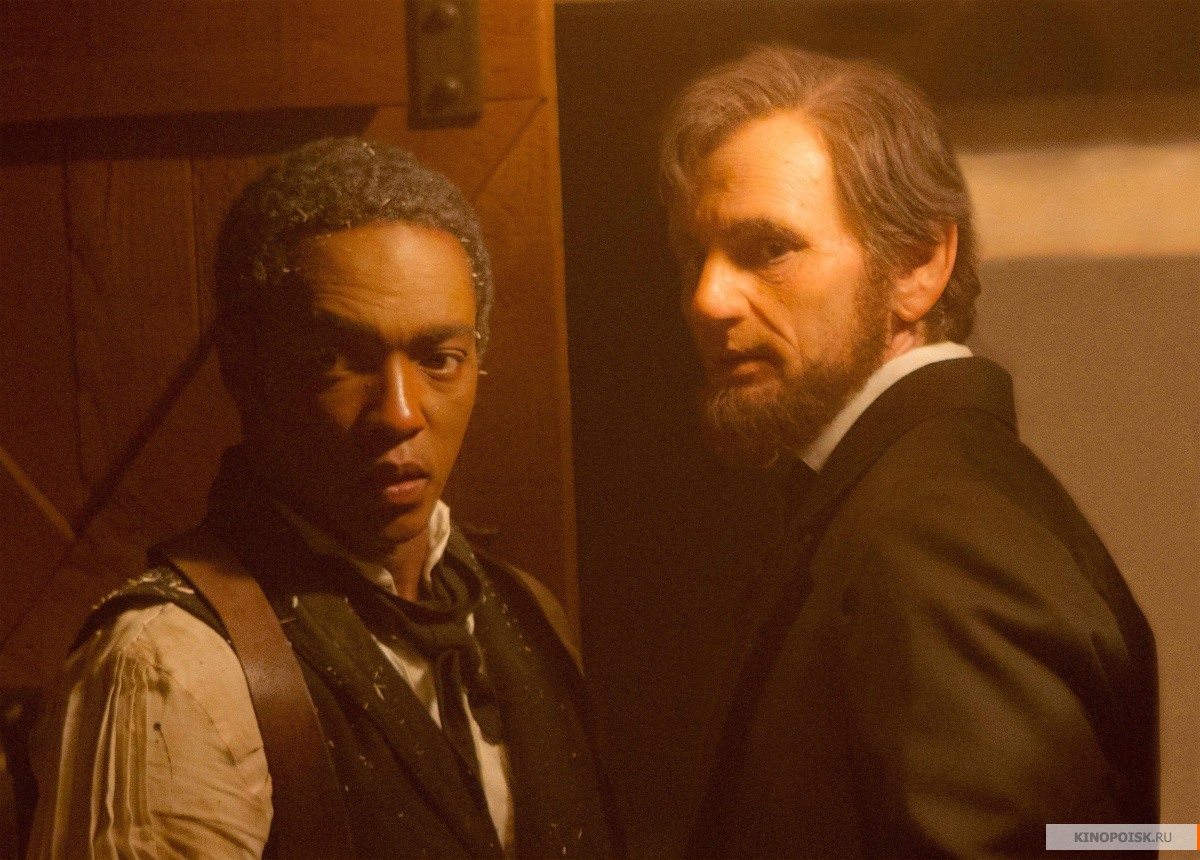
 Below are images from the new supernatural thriller, "ABRAHAM LINCOLN: VAMPIRE HUNTER". Based upon Seth Grahame-Smith's 2010 novel and directed by Timur Nuruakhitovich Bekmambetov, the movie stars Benjamin Walker, Dominic Cooper and Anthony Mackie:"ABRAHAM LINCOLN: VAMPIRE HUNTER" (2012) Photo Gallery