Below is a list of my favorite movies set during the 1500s:
TOP TEN FAVORITE MOVIES SET DURING THE 1500s

1. "The Sea Hawk" (1940) - Errol Flynn starred in this exciting, but loose adaptation of Rafael Sabatini's 1915 novel about an Elizabethan privateer. Directed by Michael Curtiz, the movie starred Brenda Marshall and Henry Daniell.

2. "Shakespeare in Love" (1998) - John Madden directed this Best Picture winner about how an imaginary love affair between playwright William Shakespeare and a wealthy merchant's daughter that led to his creation of "Romeo and Juliet". Joseph Fiennes and Oscar winner Gwyneth Paltrow starred.

3. "Anne of the Thousand Days" (1969) - Richard Burton and Oscar nominee Geneviève Bujold starred in this historical drama about Anne Boleyn's relationship with King Henry VIII of England. Charles Jarrott directed.

4. "A Man for All Seasons" (1966) - Oscar winner Fred Zinnemann directed this Best Picture winner, an adaptation of Robert Bolt's play about the final years of Sir Thomas More, Henry VIII's Lord Chancellor. Oscar winner Paul Scofield starred.

5. "Captain From Castile" (1947) - Tyrone Power starred in this adaptation of Samuel Shellabarger's 1945 novel about a Spanish nobleman's experiences during the Spanish Inquisition and Hernan Cortez's conquest of the Aztecs in Mexico. Directed by Henry King, the movie co-starred Jean Peters and Cesar Romero.

6. "The Private Lives of Elizabeth and Essex" (1939) - Bette Davis, Errol Flynn and Olivia de Havilland starred in this adaptation of Maxwell Anderson's 1930 Broadway play, "Elizabeth the Queen", a fictionalized account of the relationship between Queen Elizabeth I and the 2nd Earl of Essex. Michael Curtiz directed.

7. "Elizabeth" (1998) - Golden Globe winner Cate Blanchett starred in this highly fictionalized account of the early years of Elizabeth I's reign. Directed by Shekhar Kapur, the movie co-starred Geoffrey Rush, Joseph Fiennes and Richard Attenborough.

8. "Ever After" (1998) - Drew Barrymore starred in this loose adaptation of "Cinderella". Directed by Andy Tennant, the movie co-starred Anjelica Houston and Dougray Scott.

9. "Mary, Queen of Scotland" (1971) - Vanessa Redgrave starred in this biopic about the life of Queen Mary of Scotland. Directed by Charles Jarrott, the movie co-starred Timothy Dalton, Nigel Davenport and Glenda Jackson.

10. "Anonymous" (2011) - Roland Emmerich directed this interesting and highly fictionalized biopic about Elizabethan courtier, Edward de Vere, 17th Earl of Oxford. The movie starred Rhys Ifans, Vanessa Redgrave, Joely Richardson and David Thewlis.

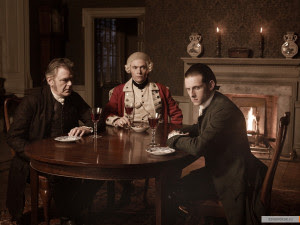
Below is a list of my five favorite episodes from Season One of AMC" "TURN: WASHINGTON'S SPIES". Created by Craig Silverstein, the series stars Jamie Bell:FIVE FAVORITE EPISODES OF "TURN: WASHINGTON'S SPIES" SEASON ONE (2014) 1. (1.08) "Challenge" - Against the wishes of Abraham "Abe" Woodhull, one of the Culper Ring spies, fellow spy Anna Strong earches for enemy intelligence at an exclusive gentleman's party hosted by British spymaster Major John Andre.
 2. (1.10) "The Battle of Setauket" - Mary Woodhull discovers that Abe is a rebel spy. Other members of the spy ring, Major Benjamin Tallmadge and Lieutenant Caleb Brewster, lead a raid on the Long Island community, Setauket, to save the local Patriot families.
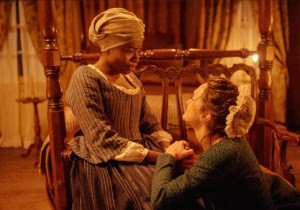
 3. (1.05) "Epiphany" - During the 1776 Christmas holidays, Caleb and Ben follow mysterious orders, while General George Washington's army crosses into enemy territory in New Jersey. Meanwhile, one of Anna's recently freed slaves, Abigail, agrees to spy for the Rebels after she is assigned to work for Major Andre, if the former would agree to look after her son Cicero.
 4. (1.09) "Against Thy Neighbor" - British Army Captain John Graves Simcoe (at least the fictional version) ignites a political witch-hunt to weed out rebel conspirators in Setauket. General Washington assigns Ben to a secret mission.
 5. (1.06) "Mr. Culpeper" - En route to New York, Abe is ambushed by a desperate patriot. Washington charges Ben with the task of creating America's first official spy ring.

"POLDARK" SERIES ONE (1975): EPISODES ONE TO FOURA few years ago, I had tried a stab at the first episode of the 1975-1977 series, "POLDARK", which starred Robin Ellis. After viewing ten minutes of theatrical acting and dated photography in Episode One on You Tube, I gave up. Last summer, I read all of the hullaballoo surrounding this new adaptation with Aidan Turner in the lead. Utilizing Netflix, I tried my luck again with the 1975 series and ended up enjoying the first four episodes (I have yet to watch any further episodes) and quite enjoyed it. I enjoyed both versions so much that I took the trouble to purchase both the entire 1975-77 series and the 2015 series. In fact, I have decided to watch both versions simultaneously. But I am here to discuss the first four episodes of the 1975 series.Series One of "POLDARK", which aired in 1975, is based upon Winston Graham's first four novels in the saga - 1945's "Ross Poldark: A Novel of Cornwall, 1783-1787", "Demelza: A Novel of Cornwall, 1788-1790" (1946), 1950's "Jeremy Poldark: A Novel of Cornwall, 1790-1791 and 1953's "Warleggan (Poldark). Episodes One to Four seemed to be an adaptation of the first novel. The series begins with a young Ross Poldark returning home to Cornwall following military service with the British Army during the American Revolution. Ross spent the last year or two as a prisoner-of-war, unaware that he had been declared dead. He learns from a fellow coach passenger and later, his father's solicitor that Joshua Poldark had died financially broke. More bad news follow with Ross' discovery that his Uncle Charles Poldark had promised to sell his estate Nampara to the banking family, the Warleggans. And lady love, Elizabeth Chynoweth, had become engaged to Charles' son, his cousin Francis, after receiving news of his "death". The only possessions Ross has left are his father's estate, Nampara, which is now in ruins, two mines that had been closed for some time and two servants - the drunken Jud and Prudie Paynter - to help him work the estate. Even worse, the Warleggans, who have risen from being blacksmiths to bankers, seemed to be gaining financial control over the neighborhood. In Episode Two, Ross rescues a miner's daughter named Demelza Carne from a mob trying to use her dog Garrick as part of a vicious dogfight at a local fair. Taking pity on her, he decides to hire her as his new kitchen maid.When I finally began to embark upon this series, I had no idea of its reputation as one of Britain's most beloved period dramas. I discovered that "POLDARK" was regarded just as highly in the 1970s, as "DOWNTON ABBEY" had become some thirty-five to forty years later. Mind you, I regard Julian Fellowes' series as the inferior series. My viewing of the first four episodes of this series made me finally appreciate why it was so highly regarded. It really is first-rate production. However . . . it had its problems. What movie or television production does not?When it comes to an accurate adaptation of any novel or play, I tend to harbor ambiguous views on the matter. It depends upon how well it serves the story on screen or if it makes sense. Anyone familiar with Graham's novels know that the 1975 adaptation is not accurate. I had no problems with the production starting with Ross' stage journey to his home in Cornwall, considering that the novel started with a meeting between Ross' dying father and his Uncle Charles. I had no problems with Elizabeth's final reason for marrying Francis - to ensure that Charles Poldark would pay off her father's debts. This little scenario even included an interesting scene in which Ross had volunteered to use his loan for Wheal Leisure to pay off Mr. Chynoweth's debts in order to gain Elizabeth's hand in marriage. Fortunately, she stopped him from committing such a stupid act. But I had a problem with one major change and a few minor ones.My biggest problem with these first four episodes of "POLDARK" centered on the circumstances that led Ross to marry his kitchen maid, Demelza Carne. Apparently, the series' producers and screenwriter Jack Pulman must have found Graham's portrayal of this situation hard to swallow and decided to change the circumstances leading to Ross and Demelza's marriage. In this version, Ross became drunk following his failure to prevent his former farmhand Jim Carter from being sentenced to prison for poaching. Demelza, who had been harboring a yen for Ross, decided to comfort him with sex. The following morning, Ross decided it would be better if Demelza no longer work at Nampara, so that he would not be tempted to have sex with her again. And what happened? Demelza eventually went to live with her father Tom Carne, now a religious zealot, and his new wife. She also discovered that she was pregnant. To make matter worse, Ross managed to convince his former love, Elizabeth Poldark, to leave his adulterous cousin Francis and live with him.One, I found it very implausible that a man of Ross' station and time would marry his kitchen maid. He might sleep with her . . . yes. But marry her? A "responsible" man like Ross would have settled money upon Demelza, find a man of her class willing to accept her as a wife and the baby as his . . . or both. He would not marry her. As for Elizabeth's willingness to leave Francis for Ross . . . I really found this implausible. Elizabeth is too pragmatic to be willing to sacrifice her respectability to leave her husband for another man. Nor would she be willing to risk losing her son Geoffrey Charles, for Francis would have never allowed her to see the boy again. The only way this whole situation could have worked is if Ross had been in love with Demelza at the time. If he had, he would have never suggested that Elizabeth leave Francis for him.There were other problems - minor problems - that I found in these first four episodes.h sex. The following morning, Ross decided it would be better if Demelza no longer work at Nampara, so that he would not be tempted to have sex with her again. And what happened? Demelza eventually went to live with her father Tom Carne, now a religious zealot, and his new wife. She also discovered that she was pregnant. To make matter worse, Ross managed to convince his former love, Elizabeth Poldark, to leave his adulterous cousin Francis and live with him.One, I found it very implausible that a man of Ross' station and time would marry his kitchen maid. He might sleep with her . . . yes. But marry her? A "responsible" man like Ross would have settled money upon Demelza, find a man of her class willing to accept her as a wife and the baby as his . . . or both. He would not marry her. As for Elizabeth's willingness to leave Francis for Ross . . . I really found this implausible. Elizabeth is too pragmatic to be willing to sacrifice her respectability to leave her husband for another man. Nor would she be willing to risk losing her son Geoffrey Charles, for Francis would have never allowed her to see the boy again. The only way this whole situation could have worked is if Ross had been in love with Demelza at the time. If he had, he would have never suggested that Elizabeth leave Francis for him.There were other problems - minor problems - that I found in these first four episodes. One episode featured Francis' violent encounter with Verity's wannabee suitor, Captain Blamey and the other, a fight between Ross and his future father-in-law, Tom Carne. And I thought Christopher Barry handled both scenes in a rather clumsy manner. Both situations seemed to be a case of "now you see it, now you don't". In Ross' fight with Carne, the 17 year-old Demelza got into the melee (which did not happen in the novel), allowing her to spout some nonsense about women's right in one of those "a woman's travails" speeches that came off as . . . well, clumsy and contrived. It did not help that actress Angharad Rees seemed to be screeching at the top of her voice at the time. In fact, screeching seemed to be the hallmark of Rees' early portrayal of the adolescent Demelza in an emotional state. Some fans have waxed lyrical over Clive Francis' portrayal of Francis Poldark. So far, I have yet to see what the big deal was about. Other than three scenes, Francis spent these first four episodes portraying a cold and rather aloof Francis. I found it difficult to get emotionally invested in the character.Considering all of the problems I had with Episodes One-Four, one would wonder why I enjoyed "POLDARK". The series may not be perfect, but it was damn entertaining. Some have compared the production to the 1939 film, "GONE WITH THE WIND". But honestly, it reminds me of the television adaptation of John Jakes' literary trilogy, "North and South". Both the Seventies series and the "NORTH AND SOUTH" Trilogy between 1985 and 1994 share so many similarities. Both series featured their own set of flaws, entertaining melodrama, strong characterizations and a historical backdrop. In the case of "POLDARK", the historical backdrop featured Great Britain - especially Cornwall - after the American Revolution, during the last two decades of the 18th century. It is a period of which I have never been familiar - especially in Britain. I never knew that Britain's conflict with and the loss of the American colonies had such a negative impact upon the country's economic state. I had heard of the United States and France's economic struggles during this period, but I never knew about Britain's struggles. I also recently learned about the impact of the fallen tin and copper prices on Cornwall, during the 1770s and especially the 1780s. This economic struggle contributed to the slow decline of the aristocracy and the landed gentry for Cornish families like the Poldarks and the Chynoweths. I thought this economic depression was well-handled by the production team. Not once did the producers, Barry or Pulman rush through Ross' struggles to establish a new fortune. They also took their time in conveying the struggles of nearly everyone else in the neighborhood - the other members of the Poldark family, the Cynoweths, and especially the working-class. This struggle of the working-class manifested not only Demelza's story arc, but also that of Jim and Jinny Carter in the first three episodes. This struggled boiled down to a heartbreaking moment in which Jim was caught poaching on a local estate and sentenced to prison - despite Ross' futile efforts to help him. I noticed that although the Warleggan family loomed menacingly in the background, only one member had made at least two appearances in these first four episodes - Nicholas Warleggan. The most famous member of the family - George Warleggan - had yet to make an appearance.And despite my complaints about the situation that led to Ross and Demelza's marriage, I must admit that the emotional journey of Ross and the other leading characters managed to grab my attention. Being familiar with Graham's novel, I am well aware that Ross' return, Elizabeth's decision to marry Francis, Ross' meeting with Demelza, the marital fallout between Elizabeth and Francis and Ross' inability to get over losing Elizabeth will have consequences down the road. I have to admit that "POLDARK" did a pretty damn good job in setting up the entire saga . . . despite a few hiccups. I found it interesting that Episode One solely featured Ross' return and his emotional reaction to Elizabeth's decision to marry Francis. He did not even meet Demelza until Episode Two. These first four episodes also set up a conflict between Demelza and Elizabeth. I have mixed feelings about this. Personally, I rather liked how Debbie Horsfield managed to set up a quasi-friendship between the two women in the new adaptation. But since Demelza and Elizabeth were probably doomed not to be friends, I see that screenwriter Jack Pulman decided to immediately go for the jugular and set up hostilities between the pair. In Episode Three, a jealous Demelza had maliciously blamed Elizabeth for Francis' infidelity, even though she had yet to meet the pair. I found this even more ironic, considering the episode also featured a minor scene in which Elizabeth actually made an attempt to emotionally reach out to Francis. He rejected her due to an assignation with some prostitute. And the whole scenario regarding Ross' suggestion that Elizabeth leave Francis and Demelza's pregnancy boiled down to a long scene in which Ross informed Elizabeth of the situation and her angry reaction. Which included calling Demelza a whore. By the end of Episode Four, Pulman and Barry had firmly established hostility between the two women.Much has been said about the series' exteriors shot in Cornwall. Yes, they looked beautiful, wild and almost exotic for Great Britain. Not even the faded photography can hide the beauty of the Cornish landscape. I also found John Bloomfield's costume designs very attractive, but not exactly mind blowing. Also, a few of the costumes for actress Jill Townsend seemed a bit loose - especially in the first two episodes. As for the series' score written by Kenyon Emrys-Roberts . . . not exactly memorable.I might as well come to the performances featured in Episodes One to Four. Overall, I found them pretty solid. Although I came away with the feeling that some of the cast members and director Christopher Barry thought "POLDARK" was a stage play. Yes, I found some of the performances a bit theatrical. And I have to include some of the main cast members. I have always liked the Charles Poldark character - not because he was likable. I simply found him rather colorful. And I thought actor Frank Middlemass did an excellent job in conveying this aspect of Mr. Poldark Senior. Jonathan Newth gave a solid, yet intense performance as the barely volatile Captain Blamey. Both Paul Curran and Mary Wimbush gave very colorful performances as Ross' slothful servants, Jud and Prudie Paynter. And yet, some of that color threatened to become very theatrical. On the other hand, Stuart Doughty gave a solid and subtle performance as Ross' former servant-turned-miner, Jim Carter. I could also say the same for Jillian Bailey, who portrayed Jim's wife, Jinny. By the way, fans of the 1983 miniseries, "JANE EYRE" should be able to spot Zelah Clarke (a future Jane Eyre) in a small role as one of the stagecoach passengers in the opening scene of Episode One.There have been a great deal of praise for Angharad Rees' portrayal of Demelza Carne, Ross' kitchen maid and soon-to-be wife. And yes, I believe she earned that praise . . . at least in the second half of Episode Three and all of Episode Four. I found her performance very lively and when the scene demanded it, subtle. I thought she was outstanding in the scene that featured Demelza's seduction of Ross. However, she was at least thirty or thirty-one when she portrayed Demelza in Series One. And her portrayal of a Demelza in early-to-mid adolescence struck me as loud and over-the-top. Thankfully, the screeching ceased in the second half of Episode Three. Clive Francis' portrayal of Francis Poldark struck me as somewhat subdued or a bit on the cold side - except in two scenes. One of them featured Francis' near death inside the Wheal Leisure mine, when he feared Ross would allow him to drown. Another featured his confrontation with Captain Blamey, the sea captain who became romantically interested in Francis' sister Verity. In both cases, the actor came off as a bit theatrical. But I thought his performance in Episode Four, which featured Elizabeth's announcement that she would leave Francis, seemed more controlled, yet properly emotional at the same time.If I have to give awards for the best two performances in these first four episodes, I would give them to Jill Townsend as Elizabeth Chynoweth Poldark and Norma Streader as Verity Poldark. It seemed to me they were the only two members of the cast who managed to avoid any theatrical acting in any of their scenes. Even when their characters were in an emotional state. One of Streader's finest moments occurred in Season Two, when she expressed her feelings about Captain Blamey in a conversation with her cousin Ross. Despite expressing Verity's emotions in a fervent manner, Streader still managed to maintain control of her performance. For me, Townsend's finest moments occurred throughout Episode Four. From the moment Ross suggested that Elizabeth leave Francis for good, Townsend conveyed Elizabeth's emotional journey throughout this episode - from surprise to hopeful to desperation, relief, happiness, disbelief, anger and finally bittersweet disappointment. I may not have approved the producers' decision to include a scene featuring Demelza's pregnancy and Elizabeth's decision to leave Francis. But dammit, Townsend acted her ass off and gave the best performance from the entire cast during this particular sequence. One of her best scenes featured a one-on-one conversation with Streader's Verity.I have seen actor Robin Ellis in other movie and television productions, including 1971's "SENSE AND SENSIBILITY" and 1981's "THE GOOD SOLDIER". If I were to pick his best roles, I would choose two - the passive aggressive American John Dowell in "THE GOOD SOLDIER" and of course, Ross Poldark. The producers of the series selected the right actor to portray the volatile war veteran-turned-mine owner from Graham's saga. He is Ross Poldark . . . of the 1970s that is. Granted, Ellis had his moments of theatrical acting. There were times during the first four episodes in which I had to turn down my television volume. But despite this, I thought he did an excellent job in capturing all aspects - both good and bad - of his character's personality. Two scenes featuring his performance caught my attention. Ellis seemed a bit scary and intense when he expressed Ross' reaction to being rejected by Elizabeth Chynoweth in Episode One. And I thought he gave a poignant performance in the scene that featured Demelza's seduction of Ross.There you have it . . . my impression of the first four episodes from the 1975 series, "POLDARK". So far, this adaptation of the first novel in Winston Graham's literary series had its share of flaws. But I feel that its virtues overshadowed the former. In fact, I found myself so captivated by Episodes One to Four that I feel more than ready to continue this saga. Onward to Episode Five!

PEACH MELBABelow is a small article about a famous dessert created around the end of the 19th century at a restaurant in London. It is called Peach Melba. The Peach Melba is an ice cream dessert that includes peaches and raspberry sauce by the French born chef, Auguste Escoffier in honor of the famous Australian sorprano, Nellie Melba. In 1892, Melba was performing in Richard Wagner's opera called Lohengrin at Covent Garden in London. The Duke of Orléans gave a dinner party at the Savoy Hotel to celebrate her triumph. Chef Escoffier, who ran the kitchens at the Savoy, created a new dessert for the occasion.Escoffier used an ice sculpture of a swan that was featured in the opera. Ice cream rested on the bed of the ice sculpture. Escoffier then topped the ice cream with peaches and spun sugar. Eight years later, Escoffier created a new version of the dessert to celebrate the opening of the Carlton Hotel, where he had become head chef. Escoffier used dishes, instead of ice swan sculptures. And he topped the peaches with raspberry purée. Other versions of this dessert over the years have use pears, apricots, or strawberries, instead of peaches; and/or the use raspberry sauce or melted red currant jelly, instead of raspberry purée.Below is a recipe for Peach Melba from the PBS website:Peach MelbaIngredients6 ripe, tender peachesSugar1 ½ pints vanilla ice cream (fresh homemade is best)1 heaping cup fresh ripe raspberries1 heaping cup powdered sugar6 tbsp blanched raw almond slivers (optional)DirectionsBoil a medium pot of water. Keep a large bowl of ice water close by. Gently place a peach into the boiling water. Let the peach simmer for 15-20 seconds, making sure all surfaces of the peach are submerged. Remove the peach from the boiling water with a slotted spoon and immediately plunge it into the ice water for a few seconds to cool. Take the peach out of the ice water and place it on a plate. Repeat the process for the remaining peaches.When all of the peaches have been submerged, peel them. Their skin should come off easily if they are ripe, thanks to the short boiling process. Discard the skins. Halve the peeled peaches and discard the pits.Optional Step: Place the peeled peaches in a large bowl of cold water mixed with 1 tbsp fresh lemon juice or ascorbic acid powder. Let the peach halves soak for 10 minutes. Drain off the water and gently pat the peach halves dry with a paper towel. This step will help to keep the peaches from oxidizing and turning brown.Sprinkle the peach halves with sugar on all exposed surfaces. Place them on a plate in a single layer, then place them in the refrigerator for 1 hour to chill.Meanwhile, make the raspberry purée. Place the raspberries into a blender and pulse for a few seconds to create a purée. Strain purée into a bowl through a fine-mesh sieve, pressing down on the solid ingredients and agitating the mixture with a metal spoon to extract as much syrupy juice as possible. It will take a few minutes to extract all of the juice from the solids. When finished, you should only have seeds and a bit of pulp left in the strainer. Dispose of the solids.Sift the powdered sugar into the raspberry purée, adding a little powdered sugar at a time, and whisking in stages till the sugar is fully incorporated into the syrup. It will take several minutes of vigorous whisking to fully integrate the powdered sugar into the syrup. Refrigerate the raspberry syrup for 1 hour, or until chilled.Assemble six serving dishes. Scoop ½ cup of vanilla ice cream into each serving dish. Place two of the sugared peach halves on top of each serving of ice cream. Divide the raspberry sauce between the six dishes, drizzling the sauce over the top of the peaches and ice cream. Top each serving with a tablespoon of raw almond slivers, if desired. Serve immediately.

 "THE FLAME TREES OF THIKA" (1981) ReviewSome might find this hard to believe, but I used to be an avid viewer of PBS's "MASTERPIECE THEATER" years ago. Even when I was a child. That is right. Even as a child, I was hooked on period dramas set in Great Britain's past. One of the productions that I never forgot happened to be one that is rarely, if ever, discussed by period drama fans today - namely the 1981 miniseries, "THE FLAME TREES OF THIKA". "THE FLAME TREES OF THIKA" is really a biopic - an adaptation of author Elspeth Huxley's 1959 memoirs of her childhood in Kenya during the last year of the Edwardian Age . . . that last year before the outbreak of World War I. The story begins in 1913 when young Elspeth Grant and her mother Tilly arrive in British East Africa (now known as Kenya) to meet her father, Robin. The latter, who is a British Army veteran, has plans to establish a coffee plantation. The Grants encounter many problems in setting up their new home. With the help of a Boer big game hunter named Piet Roos, they hire a Kikuyu local named Njombo to serve as translator for any new workers. Two of those workers are another local of Masai/Kikuyu descent named Sammy, who serves as the Grants' headman; and a Swahili cook named Juma. As life begins to improve for the Grants, they acquire new neighbors, who include a recently arrived couple named Hereward and Lettice Palmer, a Scottish-born former nurse named Mrs. Nimmo, a young and inexperienced farmer named Alec Wilson and a very dashing big game hunter named Ian Crawford. However, just as the Grants were learning to adjust to life in British East Africa, World War I begins and they are forced to adjust to a new future all over again.Overall, "THE FLAME TREES OF THIKA" struck me as a pretty decent production. It is a beautiful series to look at, thanks to Ian Wilson's cinematography. He did a marvelous job in recapturing the space and scope of Kenya. Yes, the miniseries was filmed on location. My only qualm is that Wilson may have used slightly inferior film stock. The production's color seemed to have somewhat faded over the past twenty to thirty years. Roy Stannard's art direction greatly contributed to the miniseries' look. I can also say the same about Maggie Quigley's costume designs. They looked attractive when the scene or moment called for borderline glamour. But Quigley remained mindful of her characters' social standing, age and personalities. I feel that Stannard and Quigley, along with production managers Clifton Brandon and Johnny Goodman did a very good job in recapturing the look and feel of colonial pre-World War I East Africa. Let me clarify . . . colonial East Africa for middle-class Britons. I might as well be frank. Many years had passed between the first and last times I saw "THE FLAME TREES OF THIKA". It took this recent viewing for me to realize that the production's narrative was not as consistent as I had originally assumed it was. Let me put it another way . . . I found the narrative for "THE FLAME TREES OF THIKA" a bit episodic. I tried to think of a continuous story arc featured in the miniseries, but I could only think of one - namely the love affair between Lettice Palmer, the wife of the Grants' boorish neighbor; and big game hunter Ian Crawford. And this story arc only lasted between Episodes Three and Seven. Otherwise, the viewers experienced vignettes of the Grants' one year in East Africa. And each vignette only seemed to last one episode. I must admit that I found this slightly disappointing. There were some vignettes that enjoyed. I certainly enjoyed Episode One, which featured the Grants' arrival in East Africa and their efforts to recruit help from the locals to establish their farm. I also enjoyed those episodes that featured the Grants and the Palmers' efforts to kill a leopard; a major safari in which Tilly Grant, the Palmers and Ian Crawford participated in Episode Six; and the impact of World War I upon their lives in the miniseries' final episode. However, I had some problems with other episodes. I found Episode Two, which featured young Elspeth's rather strange New Year's experiences nearly boring. Nearly. I must admit that some of the characters featured in that particular episode struck me as rather interesting. The episode that featured a personal quarrel between the Grants' translator Njombo and their headman Sammy ended up pissing me off. It pissed me off because its resolution, namely an "Act of God" in the form Tilly, struck me as a typical example of European condescension . . . even in the early 1980s.The performances for "THE FLAME TREES OF THIKA" struck me as pretty first-rate. I rather enjoyed Hayley Mills and David Robb's performances as young Elspeth's parents, Tilly and Robin Grant. Although both actors came off as likable, they also did an excellent job in portraying Tilly and Robin's less than admirable qualities . . . including an insidious form of bigotry. What I am trying to say is . . . neither Tilly or Robin came off as overt bigots. But there were moments when their prejudices managed to creep out of the woodwork, thanks to Mills and Robb's subtle performances. Sharon Maughan and Nicholas Jones were also excellent as the Grants' neighbors, Lettice and Hereward Palmer. It was easier for me to like the delicate and ladylike Lettice, even though there were times when she came of as self-absorbed. Jones' Hereward struck me as somewhat friendly at first. But as the series progressed, the actor did a great job in exposing Hereward's more unpleasant nature, which culminated in the safari featured in Episode Six. Ben Cross gave a charming and slightly virile performance as big game hunter Ian Crawford. But if I must be honest, the character was not exactly one of his more complex and interesting roles. But the one performance that shined above the others came from the then twelve year-old Holly Aird, who portrayed Elspeth Grant, the miniseries' main character. Not only did Aird give a delightful performance, she also held her own with her much older cast mates. Quite an achievement for someone who was either eleven or twelve at the time.There were other performances in "THE FLAME TREES OF THIKA" that I found impressive. Carol MacReady was entertaining as the somewhat narrow-minded Mrs. Nimmo. Mick Chege gave a charming performance as the always cheerful and popular . David Bradley's portrayal of young neighbor Alec struck me as equally charming. Paul Onsongo gave a solid performance as the Grants' major domo/cook Juma. However, Onsongo's last scene proved to be very complex and interesting when Juma discovered that he could not accompany the Grants back to Britain. One of the series' most interesting performances came from William Morgan Sheppard, who portrayed Boer big game hunter, Piet Roos. The interesting aspect of Sheppard's performance is that although he conveyed Roos' more unpleasant and racist side in Episode One, he did an excellent in winning the audience's sympathy as his character dealt with the more unpleasant Hereward Palmer during the leopard hunt in Episode Five. Another interesting performance came from Steve Mwenesi as the Grants' headsman, Sammy. Mwenesi did an excellent job in portraying the very complex Sammy. The latter seemed so cool and subtle. Yet, Mwenesi also made audiences aware of Sammy's emotions by utilizing facial expressions and his eyes.Overall, "THE FLAME TREES OF THIKA" was an entertaining production that gave audiences a peek into the lives of colonial Britons during the last year of peace before the outbreak of World War I. Realizing that the story deal with members of the British middle-class and the Kikuyu and Swahili locals, the production team ensured that the miniseries was rich in atmospheric details without over-glamorizing the setting and costumes. And although the miniseries' narrative came off as somewhat episodic, I also managed to enjoy the performances of a first-rate cast led by Hayley Mills, David Robb and an enchanting Holly Aird.