Friday, March 11, 2011

"THE SOCIAL NETWORK" (2010) Review


"THE SOCIAL NETWORK" (2010) Review

One of the movies from 2010 that had been touted as a strong Oscar contender is David Fincher’s latest film called "THE SOCIAL NETWORK". Based upon Ben Mezrich’s 2009 book about the founding of Facebook - The Accidental Billionaires: The Founding of Facebook, A Tale of Sex, Money, Genius, and Betrayal” - the movie starred Jesse Eisenberg and Andrew Garfield as two of Facebook’s co-founders, Mark Zuckerberg and Eduardo Saverin.

”THE SOCIAL NETWORK” began in 2003, when Harvard University student, Mark Zuckerberg, came up with the idea to create a website to rate the attractiveness of female Harvard undergraduates, after his girlfriend Erica Albright broke up with him. After downloading photos and names of female students from the various databases of resident halls, Zuckerberg created a website called ”FaceMash” where male students can choose which of two girls presented at a time is more attractive. Zuckerberg’s actions became the catalyst for the creation of ”Facebook”, when his ”FaceMash” site attracted the attention of twin brothers Cameron Winklevoss and Tyler Winklevoss and their friend and partner, Divya Narendra, who hire him as their programmer for their site, ”Harvard Connection”. Instead, Zuckerberg asked his friend Eduardo Saverin to finance a new site he planned to create called ”Thefacebook”, the predecessor to ”Facebook”. Zuckerberg’s new site also attracted the attention of entrepreneur and co-founder of ”Napster”, Sean Parker, of whom Saverin developed a dislike. The website also led to the formation of a new corporation, the end of Zuckerberg and Saverin’s friendship and several lawsuits filed against him.

From a technical point of view, ”THE SOCIAL NETWORK” is an excellent movie. Director David Fincher did an excellent job of making the best of Aaron Sorkin’s screenplay. And the latter portrayed the creation of Facebook and the conflicts of all those involved with a witty and complex story. When I had first saw the trailer for ”THE SOCIAL NETWORK”, I suspected that the movie would portray Zuckerberg as this one-dimensional, arrogant and cold-blooded nerd with an inability to communicate with anyone. Superficially, actor Jesse Eisenberg portrayed the entrepreneur in that matter. But thanks to Fincher’s direction, Sorkin’s script and Eisenberg’s performance, Zuckerberg is portrayed with greater complexity. And I can say the same about the other characters. My only complaint about the movie is that I found the revelation that the scenes depicting the creation of ”Facebook” were flashbacks handled in a very awkward manner.

Aside from Eisenberg’s excellent performance, I was also impressed by Andrew Garfield’s portrayal of ”Facebook” co-founder Eduardo Saverin. Like Eisenberg, he gave a complex portrayal of his character without losing any sympathy. Armie Hammer must have had a ball portraying the Winklevoss twins. Rooney Mara was very effective as Erica Albright, the ”girl who got away” and whose rejection of Zuckerberg set in motion the creation of ”Facebook”. But I was truly impressed by Justin Timberlake’s portrayal of ”Facebook consultant and entrepreneur Sean Parker. I had no idea that the singer had the acting chops to portray such an energetic and complex role. Also, it was interesting to see Joseph Mazello (of ”JURASSIC PARK” and the recent HBO miniseries, ”THE PACIFIC”) portraying another ”Facebook” co-founder, Dustin Moskovitz. However, he does not seem to physically resemble the actual person.

From a technical point of view, it is easy to see why ”THE SOCIAL NETWORK” has become a front runner for the Academy Awards. It is basically a well made movie with very little flaws. However, it has failed to become a favorite of mine. Why? Quite simply, it left me feeling cold. It failed to move me. I found the events of the creation of ”Facebook” and the law suits that followed fascinating . . . but cold. I suspect my lack of emotions over the film has a lot to do with Fincher’s chilly direction and my inability to really care for any of the characters. I like complex characters in fictional or biographical stories a lot. But I found the characters in ”THE SOCIAL NETWORK” simply too chilly and self-involved for my tastes. And Fincher’s direction and Sorkin’s script failed to make me care about them or their situation. However, I do believe that this is an excellent movie. And it deserved the Best Picture Oscar more than "THE KING'S SPEECH" did.

Tuesday, March 8, 2011

”CHARMED” RETROSPECT: (6.10) “Chris-Crossed”


Here is an article I had written about an episode of "CHARMED" called (6.10) "Chris-Crossed":


”CHARMED” RETROSPECT: (6.10) “Chris-Crossed”

For the past five or six years, I have never hesitated to express my scorn toward Seasons Five to Eight of ”CHARMED”. Granted, I would never consider the series’ first four seasons as examples of television excellence. Yet, in compare to the last four seasons, Seasons One to Four might as well be considered masterpieces. However, ”CHARMED” did managed to air a few noteworthy episodes during its latter seasons. And one of those episodes happened to be Season Six’s (6.10) “Chris-Crossed”.

Penned by Cameron Litvack and directed by Joel J. Feigenbaum, ”Chris-Crossed” features a story in which the Charmed Ones’ new whitelighter, Chris Perry aka Chris Halliwell (Drew Fuller) faces a love from the future who is determined to jeopardize his current mission – namely to prevent Wyatt (Wes Ramsey) from embarking upon a path of evil- in order to save his life. Chris’ mission nearly unravels when his fiancée from the future, a Phoenix witch/assassin named Bianca (Marisa Nichols) appears in order to bring Chris back to the future by whatever means necessary.

”Chris-Crossed” marked another example of how the series in its latter years managed to derive its energy from memorable supporting characters or guest stars. This episode bridled with energy, thanks to the on-screen dynamics between Drew Fuller and Marisa Nichols. Wes Ramsey made an impressive villain as the future, evil Wyatt Halliwell. And I have to say the same for Rebecca McFarland, who portrayed Bianca’s 2003 mother, Lynn. In fact, I have to give kudos to both Nichols and McFarland for portraying Bianca and Lynn as a complex and fascinating mother/daughter pair. The regular cast gave solid performances, as well. But I certainly did not find their performances as impressive as Fuller or the episode’s guest stars.

Litvack’s script did have its flaws. One, I could not conceive future Wyatt using his family’s home to be used as a museum in honor of his mother and aunts. Especially since Chris had made it clear that Wyatt murdered Phoebe, following Piper and Paige’s deaths. Two, the idea that Chris’ reason for traveling to the past seemed to contradict his original concerns from the Season Five finale, (5.22 & 5.23) “Oh My Goddesses!” - namely to prevent the Titans from destroying the Whitelighter Realm and killing Paige.

My final complaint centers around Wyatt’s Halliwell museum again. How on earth did Piper’s oldest son got hold of the mermaid fins that Phoebe wore in (5.01 & 5.02) “A Witch’s Tail? And how did he get his hands on the super heroine costumes that the Halliwell sisters wore in (5.05) “Witches in Tights”? The mermaid fins should have disappeared completely once Phoebe changed back to a mortal. And the super heroine costumes worn by the sisters had been a figment in the imagination of a young witch named Kevin, who possessed the ability of though projection. I also had problems with Piper and Paige’s visit to the home of Bianca’s mother, Lynn. How did they plan to deal with her, when they surreptiously (if you can call it that) let it known to Lynn that they knew she was a Phoenix witch? What were they planning to do? Kill her and leave five year-old Bianca as an orphan, after getting some information? Kill the five year-old Bianca, as well?

Thankfully, the episodes’ virtues outweighed the flaws. Litvack penned a first-rate script that gave the Halliwells the opportunity to discover that Chris might be more than what he seemed. He also provided a poignant romance between Chris and his loving witch/assassin Bianca. Viewers were even able to witness an interesting confrontation between Bianca and the Charmed Ones. Bianca proved in that scene that she could be just as formidable (or perhaps a little more) as the Power of Three, using her brains and skills. Most importantly, ”Chris-Crossed” gave viewers a detailed peek into one possible future for Piper’s two sons. A future filled with violence, chaos, secrecy, love and loss. A future that Chris is determined to alter via the fate of his older and more powerful brother.

As I had stated earlier, I have an extremely low opinion of Seasons Five to Eight of ”CHARMED”. Yet, due to some miracle, producer Brad Kern and one of his writers - Cameron Litvack – managed to create a “diamond in the rough”, namely ”Chris-Crossed”. Not only did the episode proved to be a rare gem in an otherwise dismal period in the series’ history, I believe that it might be considered – on my part – as one of the best episodes of ”CHARMED”.


Saturday, March 5, 2011

"EMMA" (2009) Photo Gallery


Below are photos from the 2009 BBC miniseries, "EMMA". Directed by Jim O'Hanlon, the miniseries stars Romola Garai, Jonny Lee Miller and Michael Gambon:


"EMMA" (2009) Photo Gallery


Monday, February 28, 2011

"THOSE MAGNIFICENT MEN IN THEIR FLYING MACHINES" (1965) Review


"THOSE MAGNIFICENT MEN IN THEIR FLYING MACHINES" (1965) Review

Many comedies featuring a long running time and a cast of celebrities were very prevalent in Hollywood and Europe during the 1960s. One of the more famous of these films happened to be the epic 1965 comedy titled ”THOSE MAGNIFICENT MEN IN THEIR FLYING MACHINES, Or How I Flew from London to Paris in 25 Hours 11 Minutes”. Directed and co-written by Ken Annakin, this two hour and eighteen minutes film depicted an comedic air race between London and Paris in 1910.

Director Annakin first came up with the idea of a pre-World War I air race while co-directing Darryl Zanuck’s World War II epic, ”THE LONGEST DAY” (1962). He pitched the idea to the producer and the latter agreed to bankroll the film. Zanuck also came up with the movie’s title, after Elmo Williams, managing director of 20th Century Fox in Europe, told the producer that his wife had written an opening lyric to the movie’s song:

Those magnificent men in their flying machines,
They go up diddley up-up, they go down diddley down-down!


Annakin complained would eventually "seal the fate of the movie". However, after being put to music by composer Ron Goodwin, the ”Those Magnificent Men in their Flying Machines” song would become the "irresistible" jingle-style theme music for the film and go on to have a "life of its own", even released in singles and on the soundtrack record. I can relate. To this day, I still consider the tune one of the best theme songs in movie history.

Annakin, along with Jack Davies, wrote a story that opened with a brief, comic introductory segment on the history of flight, narrated by James Robertson Justice and featuring American comedian Red Skelton (in a cameo appearance) that depicted a recurring character whose aerial adventures span the centuries, in a series of silent blackout vignettes that incorporate actual stock footage of unsuccessful attempts at early aircraft. As the story unfolded, Lord Rawnsley (Robert Morley), a newspaper magnate whose favorite to win his race is his daughter's fiancé, Richard Mays (James Fox). Lord Rawnsley summed up the expectation that a Britisher should win the competition: "The trouble with these international affairs is they attract foreigners." An international cast plays the array of contestants, most of whom live up to their national stereotypes, including the fanatically by-the-book, monocle-wearing Prussian officer (Gert Fröbe), the impetuous Count Emilio Ponticelli (Alberto Sordi), an amorous Frenchman (Jean-Pierre Cassel) , and the rugged American cowboy Orville Newton (Stuart Whitman), who falls for Lord Rawnsley's daughter, Patricia (Sarah Miles).

The main entertainment came from the amusing dialogue and characterizations and the daring aerial stunts, with a dash of heroism and gentlemanly conduct thrown in for good measure. Terry-Thomas portrayed the cheating Sir Percival Ware-Armitage, an aristocratic rogue who "never leaves anything to chance". With the help of his bullied servant Courtney (Eric Sykes), he sabotaged other aircraft or drugs their pilots - only to get his comeuppance in the end. The film is also notable for its use of specially constructed reproductions of 1910-era aircraft, including a triplane, as well as monoplanes and biplanes. Air Commodore Wheeler insisted on using the authentic materials of the originals, but with modern engines and modifications (where necessary) to ensure safety.

In the end, ”THOSE MAGNIFICENT MEN IN THEIR FLYING MACHINES” became one of the most successful ”epic comedies” to emerge from the 1960s. Not only did it score top notches at the box office, it was also nominated and received various movie awards in both the U.S. and Great Britain. The original screenplay written by Ken Annakin and Jack Davies was nominated for an Academy Award for Best Writing Directly for the Screen (1966). The film was also nominated in the category of Best Writing, Story and Screenplay - Written. At the 1966 Golden Globes, the film won Best Motion Picture Actor - Musical/Comedy for Alberto Sordi, as well as being nominated in Best Motion Picture - Musical/Comedy and Most Promising Newcomer - Male for James Fox.

I can say with true honesty that ”THOSE MAGNIFICENT MEN IN THEIR FLYING MACHINES” has become one of my favorite movies from the 1960s. Ken Annakin and his production crew had created a stylish and funny movie. The movie was filled with memorable characters like Terry-Thomas’ dastardly Sir Percival Ware-Armitage, Alberto Sordi’s eager aviator Count Emilio Ponticelli and Gert Fröbe’s by-the-book Prussian Colonel Manfred von Holstein. One very witty moment featured the arrival of the Japanese pilot, Yamamoto (Yujiro Ishihara), whose description of his journey from Japan to Great Britain turned out to be less exciting than a reporter had assumed.

Thomas N. Morahan’s production design and Osbert Lancaster’s costumes managed to evoke the bygone era of Europe and especially Great Britain during the last years before the outbreak of World War II. Christopher Challis’ photography and the Special Effects department led by Ron Ballinger did a great job in re-creating the actual air race shown during the last third of the film. Two of my favorite scenes featured the contestants leaving Dover to cross the English Channel and the race’s exciting finale in Paris. I also enjoyed the pre-race interlude at Dover in which the contestants and their families/companions spend a few hours frolicking in the sea and sipping champagne.

Not all seemed perfect with ”THOSE MAGNIFICENT MEN IN THEIR FLYING MACHINES. One tiresome aspect of the film included the running joke featuring Pierre Dubois’ (Jean-Pierre Cassel) encounters with six women of different nationalities that all look alike and are portrayed by Irina Demick. I found it slightly amusing when Dubois encountered two of the women. By the time of Dubois’ encounter with the fifth Ms. Demick, I found myself screaming for the joke to end. Romance did not fare very well in the movie. Granted, James Fox’s Mays and Sarah Miles’ Patricia made a quaint couple. But Whitman’s arrival as Orville Newton, Mays’ rival in the race and for Patricia’s hand, did not improve matters. The problem was that Whitman and Miles made a poor screen team. According to Annakin, the two actors had a falling out after Whitman attempted to romantically pursue Miles and the two ended up disliking each other so much, they had trouble portraying a romance between Orville and Patricia. Mind you, Whitman and Miles had a few scenes that did generate chemistry. I suspect those scenes had been filmed before the fallout.

I must admit that ”THOSE MAGNIFICENT MEN IN THEIR FLYING MACHINES” can boast some hilarious moments and dry wit. But most of the humor seemed focused upon the Keystone Cops antics of the aviators during the days leading up to the race and the race itself. Most of the film’s humor featured bizarre plane crashes, hackneyed stunts and cliché portrayals of the various nationalities featured in the film. I rather liked the comedian Benny Hill . . . but not in this movie. In ”THOSE MAGNIFICENT MEN”, he portrayed a fire chief, whose job was to keep an eye out for aviation accidents. And whenever a crash occurred, it gave Hill and his cronies the opportunity to engage in an extreme form of slapstick humor that forced me to press the Fast Forward button of my DVD player . . . every damn time. But if there is one aspect of the movie I find frustrating, it is the fact that ”THOSE MAGNIFICENT MEN IN THEIR FLYING MACHINE” is a two hour and eighteen minute film about an air race . . . that does not occur on screen until the last 45-47 minutes. The movie’s first fifteen or twenty minutes focused upon the characters’ introduction. But most of the movie’s action does not focus upon the race. Instead, it focused upon the few days before the race in which one has to endure practice flights that include countless crashes and slapstick humor. And every time I watch this film, I find this aspect so . . . damn . . . FRUSTRATING.

Technically, ”THOSE MAGNIFICENT MEN IN THEIR FLYING MACHINES” is a first-rate film. Although I found some of the dry humor to be rather sharp and entertaining, the slapstick humor that dominated the film became very hard for me to bear. I am also not thrilled that only one-third of the film had focused upon the actual race. But I have to give the movie points for the creation of interesting characters like Sir Percy Ware-Armitage and Count Emilio Ponticelli, along with a memorable and catchy theme song. And I must give Annakin and his production crew credit for re-creating a charming look at the elegance of pre-World War I Europe. Overall, ”THOSE MAGNIFICENT MEN IN THEIR FLYING MACHINES” has remained a fun and entertaining look at the early days of aviation that moviegoers today might still enjoy.

Friday, February 25, 2011

"BAND OF BROTHERS" (2001) - Episode Four "Replacements" Commentary


"BAND OF BROTHERS" (2001) - Episode Four “Replacements” Commentary

In the last episode, ”Carentan”, yet-to-be-announced First Sergeant Carwood Lipton announced to Normandy veterans Easy Company that they would be returning to France. Instead, a conversation between Sergeant Bill Guarnere and a group of replacements reveal that Easy Company never did. Eventually Easy Company did return to the Continent when they were deployed to the Netherlands to participate in the doomed Operation Market Garden campaign.

”Replacements” centered on Sergeant Denver "Bull" Randleman and his experiences during Operation Market Garden and with the replacements in his platoon. One of them included Edward “Babe” Heffron, who hailed from the same Philadelphia neighborhood as Guarnere (this was established at the end of Carentan”). The other three include Antonio Garcia, James Miller and Lester “Leo” Hashey. Through both his and their eyes, viewers get to experience Easy Company’s trouble-free jump into Holland, the Dutch citizens’ joyous reaction to their presence in Eindhoven and their disastrous encounter with battle-hardened S.S. troops – one of many encounters that led to the failure of Operation Market Garden. Following Easy Company’s retreat from Eindhoven, a wounded “Bull” Randleman finds himself trapped in the German-occupied town and is forced to find his way back to Easy Company and the American lines.

”Replacements” turned out to be a decent episode, but it was one that did not knock my socks off. It featured a terrifying battle in which Easy Company was forced to retreat in defeat. And it also gave viewers an interesting view in the mindsets of replacement troops like Garcia, Miller and Hashey; who seemed to regard Randleman and the other Toccoa trained men with awe. In scenes that featured Easy Company’s brief liberation of Eindhoven, the episode revealed the cruel fates inflicted by the Dutch citizens upon local women who had collaborated (had sex) with some of the occupying German troops. And viewers got to enjoy more scenes featuring some of the men engaging in small talk that revealed more of their personalities. The episode also had interesting scenes that featured Lewis Nixon’s brief brush with death (a bullet in his helmet) and Winters’ reaction, Easy Company’s brief reunion with Herbert Sobel, who had become a supply officer; and David Webster, Don Hoobler and Robert Van Klinken’s humorous encounter with a Dutch farmer and his son. However, ”Replacements” belonged to one particular character, namely Denver “Bull” Randleman. Screenwriters Graham Yost and Bruce C. McKenna did a solid job in both his characterization and the Holland experiences of the Arkansas-born sergeant. One of the episode's more harrowing scenes featured a violent encounter between a wounded Randleman and a German soldier inside a barn, while the owner - a Dutch farmer - and his daughter look on.

But Randleman's experiences during Operation Market Garden would have never been that effective without Michael Cudlitz's subtle performance as the quiet and imposing Randleman. With very little dialogue, Cudlitz conveyed the veteran's battle experiences and emotions through body language, facial expressions and the use of his eyes. He made it easy for me to see why the troopers of First Platoon and even the company's officers held with such high regard. Cutdliz was ably supported by the likes of Dexter Fletcher's sardonic portrayal of First Platoon's other NCO, John Martin; Frank John Hughes' amusing performance as the verbose Bill Guarnere; and Peter McCabe, who turned out to be one of the few British actors who perfectly captured the accent and speech patterns of an American combatant in his portrayal of the aggressive Donald Hoobler. Also, it was nice to see David Schwimmer again as Easy Company's much reviled former commander, Herbert Sobel in a more subtle performance. Portraying the inexperienced replacement troops were James McAvoy (James Miller), Douglas Spain (Antonio C. Garcia) and Mark Huberman (Lester “Leo” Hashey). And each actor did a solid job in portraying their characters’ inexperience, awe of the veteran Toccoa men and their determination to prove themselves in combat.

However, ”Replacements” had its problems. One, the opening scene at the English pub featured Walter Gordon revealing Carwood Lipton as the company’s new first sergeant. And this moment really seemed out of place, considering that Lipton was already acting like the new first sergeant at the end of ”Carentan”. Aside from the battle scene, I must admit that this was not an exciting episode. Like ”Day of Days”, it featured a major historical event – in this case, Operation Market Garden – that had exciting moments, but lacked an epic quality that would have suited such a topic. Allowing the episode a longer running time would have been a step in the right direction. And if I must be honest, I got the feeling that not much really happened in this episode, in compare to ”Day of Days”.

But, ”Replacements” turned out to be a decent episode. Although it lacked an epic quality for a story about Easy Company’s experiences during Operation Market Garden, it did feature an exciting battle that resulted in defeat for them. And Michael Cutdliz gave a subtle and first-class performance as the episode’s central character, “Bull” Randleman.

Wednesday, February 23, 2011

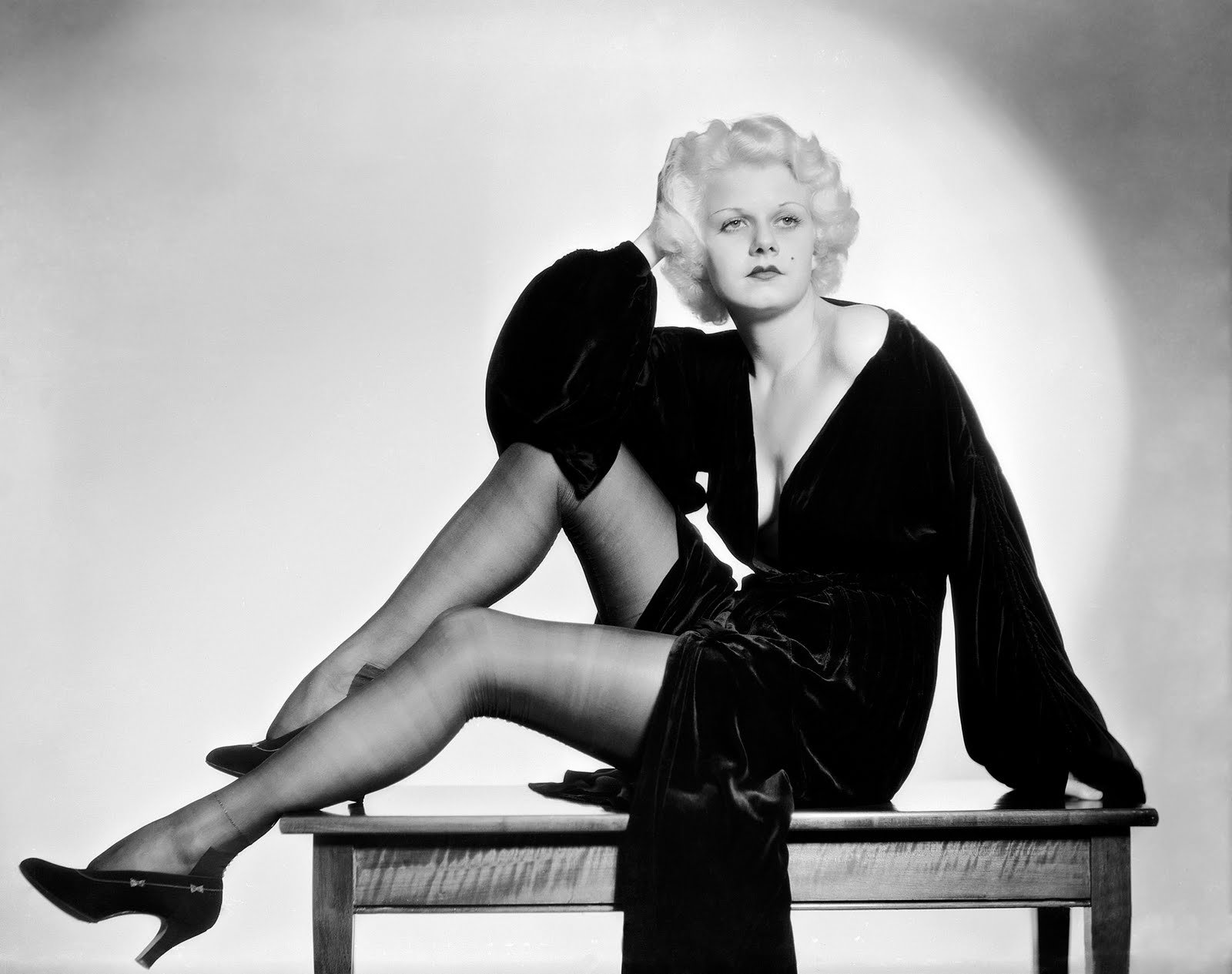
"PLATINUM BLONDE" (1931) Photo Gallery


Below images from Frank Capra's 1931 romantic comedy called "PLATINUM BLONDE". The movie starred Loretta Young, Robert Williams and Jean Harlow:


"PLATINUM BLONDE" (1931) Photo Gallery


Sunday, February 20, 2011

"THE CHRONICLES OF NARNIA: VOYAGE OF THE DAWN TREADER" (2010) Review


"THE CHRONICLES OF NARNIA: VOYAGE OF THE DAWN TREADER" (2010) Review

Since the last cinematic installment of the ”NARNIA” franchise failed to make as much money as the first film, the Walt Disney Studios decided to end its association with C.S. Lewis’s saga and not continue with a third movie. Twentieth Century Fox came to the rescue and agreed to release the third film, ”THE CHRONICLES OF NARNIA: VOYAGE OF THE DAWN TREADER”.

Directed by Michael Apted, ”THE CHRONICLES OF NARNIA: VOYAGE OF THE DAWN TREADER” centered around the adventures of the two younger Pevensie siblings – Edmund (Skandar Keynes) and Lucy (Georgie Henley) – and their return to Narnia some three years after their adventures in ”PRINCE CASPIAN”. During the last year of World War II, Edmund and Lucy are living with relatives in Cambridge. One of those relations is their obnoxious cousin, Eustace Stubbs (Will Poulter), who accompanies them back to Narnia, when they are pulled into a painting inside his bedroom. The painting turns out to be a portrait of the Dawn Treader, a royal vessel belonging to the now King Caspian X (Ben Barnes). Caspian has been on a three-year voyage in search of the seven Lords of Narnia, whom his uncle Miraz (the villain of ”PRINCE CASPIAN”) had banished when he usurped the Narnian throne. Along the way they encounter slave traders, dragons, dwarves, merfolk, a band of lost warriors and a mysterious mist that represents the spirit of Evil, before reaching the edge of the world.

”VOYAGE OF THE DAWN TREADER” proved to be something of a departure from the previous two stories. One, the protagonists spend most of their time aboard a ship, traveling from one location to another. Secondly, only two of the Pevensie siblings are major characters in this tale, Edmund and Lucy. Apparently Peter (William Peter Moseley) and Susan (Popplewell) are traveling in the United States with their parents. However, both appear in a spell sequence in which Lucy images herself with Susan’s looks. Most importantly, the story’s main protagonist is not a certain individual. Instead, Edmund, Lucy, Caspian, Eustace and the crew of the Dawn Treader have to face a mysterious mist that acts more or less as a malignant spirit that influences the darker aspects of their personalities, fears and desires.

I might as well be frank. I am not a major fan of C.S. Lewis’ ”THE CHRONICLES OF NARNIA” novels. I never have been a major fan and I doubt that I will ever become one. But I must admit that the last two movies made me appreciate them a lot more than if I had never seen them. I must admit that Walden Media had produced some very entertaining movies. As for ”VOYAGE OF THE DAWN TREADER”, screenwriters Christopher Markus, Stephen McFeely and Michael Petroni found themselves with a dilemma. Lewis’ third NARNIA story turned out to be a bit disjointed and episodic. The BBC solved this problem by combining both ”VOYAGE OF THE DAWN TREADER” and the fourth novel, ”THE SILVER CHAIR” into one production. Director Michael Apted and the three screenwriters were not that drastic. Instead, they assimilated some elements of the fourth novel (like the Narnians being held hostage by the mist and rescued) into the third movie’s script. Did it work? Perhaps it did not work for some, but it certainly worked for me. As I had earlier pointed out, the story’s main antagonist turned out to be a mysterious green mist that served as a euphemism for the characters’ inner fears, desires and darkness. In this regard, the mist reminded me of the First Evil character from Season Seven of ”BUFFY THE VAMPIRE SLAYER”. Many movie and television fans may not be that enamored of this type of “villain”, but it did not bother me. I have discovered that the older I get, the more I enjoyed such storylines that provide ambiguous catalysts for the characters’ inner conflicts.

I enjoyed ”VOYAGE OF THE DAWN TREADER” very much. More than I had expected to. I had not expected to enjoy it that much, considering this was the first movie not to feature all four of the Pevensie siblings. If I must be honest, I did not miss Peter and Susan Pevensie. Edmund and Lucy managed to create a tight relationship with King Caspian and later, their cousin Eustace. And one has to give thanks to the solid screen chemistry between Skandar Keynes, Georgie Henley, Will Poulter and Ben Barnes. Simon Pegg’s vocal performance as the swashbuckling mouse, Reepicheep added nicely to the mix.

One of the best aspects of ”VOYAGE OF THE DAWN TREADER” was that the movie explored a good deal of the main characters’ personalities – especially their insecurities, fears and desires – due to the effect of the green mist. This gave Skandar Keynes a chance to explore another dark aspect of Edmund Pevensie’s personality – namely his resentment over Caspian’s position as Narnia’s most recent king and his own desire for power. And Keynes proved he had the acting chops to convey this aspect of Edmund’s personality and at the same time, maintain the character’s growing maturity. Georgie Henley proved to be something of a revelation in her portrayal of Lucy Pevensie. She had come a long way from the innocent and friendly young girl in 2005’s ”THE LION, THE WITCH AND THE WARDROBE”. Thanks to the green mist story arc, she made great use of her chance to stretch her acting skills by effectively portraying Lucy’s insecurities regarding her looks and living in the shadow of older sister Susan. Ben Barnes’ portrayal of the now King Caspian X struck me as more mature and solid. Yet, Barnes is also talented enough to convey hints of Caspian’s own insecurities of living up to his father’s name . . . and the reputations of the Pevensies in Narnia. Liam Neeson was as impressive and commanding as ever, while providing the voice for Aslan the Lion. And Simon Pegg was charming and effervescent as the heroic mouse, Reepicheep. I especially enjoyed the scene in which Reepicheep tries to give fencing lessons to a very reluctant Eustace. Speaking of Eustace Scrubb, actor Will Coulter literally stole the movie as Edmund and Lucy’s arrogant and obnoxious cousin. In fact, Coulter’s performance was so impressive that at times, he seemed like a pugnacious adult in a child’s body. The speaking voice he utilized for Eustace struck me as very strange, yet comic. I was not surprised to learn that Coulter managed to earn a nomination as Young Performer of the Year for the 2010 London Film Critics Circle Awards.

If there is one thing about ”VOYAGE OF THE DAWN TREADER” that did not appeal to me was that it had been shot in 3D. I have made it clear in my reviews of ”AVATAR” and ”ALICE IN WONDERLAND” that I am not a fan of 3D photography – at least for motion pictures. And if I must be frank, I did not find the 3D effects for this movie particularly impressive. Instead of a headache, I ended up suffering from sinus congestion from wearing eyeglasses and 3D glasses. And as much as I had enjoyed ”VOYAGE OF THE DAWN TREADER”, I really saw no need for it to be shot in 3D. But thanks to cinematographer Dante Spinotti and visual effects supervisors, Angus Bickerton and Jim Rygiel; I must admit that I enjoyed the movie’s beautiful photography and visual effects.

In the end, I enjoyed ”THE CHRONICLES OF NARNIA: VOYAGE OF THE DAWN TREADER” very much. Despite being shot in 3D, I still managed to enjoy the beautiful photography and visual effects. Screenwriters Christopher Markus, Stephen McFeely and Michael Petroni managed to take a novel with an episodic storyline and transform it into something more solid. The storyline regarding the green mist (a metaphor for the spirit of Evil) allowed the cast to delve into their characters’ darker impules and desires with great skill. And director Michael Apted managed to put it all together in an entertaining film.